

Hey there, home canning enthusiast! So, you want to transform your taters into pantry powerhouses? Let’s dive into the gratifying world of preserving potatoes. In this can-do guide, we’ll uncover the secrets of pressure canning, ensuring your spud stash is safe, savory, and stocked up year-round. With these handy tips, food preservation will become your new kitchen hobby—talk about a ‘root’ awakening!
Imagine never needing to race to the store just for a potato fix. Whether it’s for a last-minute stew or an impromptu batch of home fries, your preserved potatoes are there, like trusty underground treasures. We’re bringing the age-old tradition of home canning back with panache, and trust us, the reassurance of a full pantry is just one pressure valve away!
The Revival of Home Canning: Why Potatoes?
Isn’t it fascinating how a global shake-up can cause a wave of nostalgia mixed with innovation right in your kitchen? That’s exactly what happened when the quest for a hearty pandemic pantry rebooted the age-old craft of preserving food. Potatoes, those humble and hearty staples, have made a dramatic comeback on the canning charts. Let’s dig into why this root vegetable became the poster child for long-term food storage during these extraordinary times.
Rediscovering Traditional Food Preservation
As you rush to the grocery store only to find the potato bin picked over or limited by buying restrictions, a light bulb goes off. Why not bring those dusty canning jars out of retirement? Yes, stocking up is more than just filling the pantry; it’s about embracing pressure canning basics to safeguard your future meals. And what better place to start than with the spud?
Canning potatoes isn’t just about convenience; it’s a link to a simpler time when self-preservation was a rite of passage. It’s storing comfort in jars, knowing that no matter what, you’ve got the makings of a heartwarming meal at your fingertips. And let’s face it, there’s nothing quite like the clinking sound of your canned goods—proof of your labor, sealed and stored. It’s the self-sufficient symphony of sustainability.
The Push for Self-Sufficiency During Trying Times
It’s no secret that the current events have thrown us all for a loop. When the foundations of your everyday are quaking, taking control of your food supply provides an empowering piece of solid ground. You’ve learned that pressure canning, championed by authorities like Penn State University Extension, isn’t just a method; it’s a survival skill polished to a high gloss in the era of uncertainties.
It’s about knowing that come what may, your pantry is a buffer against the chaos, a repository of readiness and resilience. And as you stack your jars of beautifully canned potatoes, you’re not just preparing, you’re proclaiming your adaptability. Even a simple spud shows that you’re not just enduring but thriving in the face of adversity. That’s the spirit behind creating a trusty pandemic pantry—a way to weather any storm with deliciously stocked shelves.
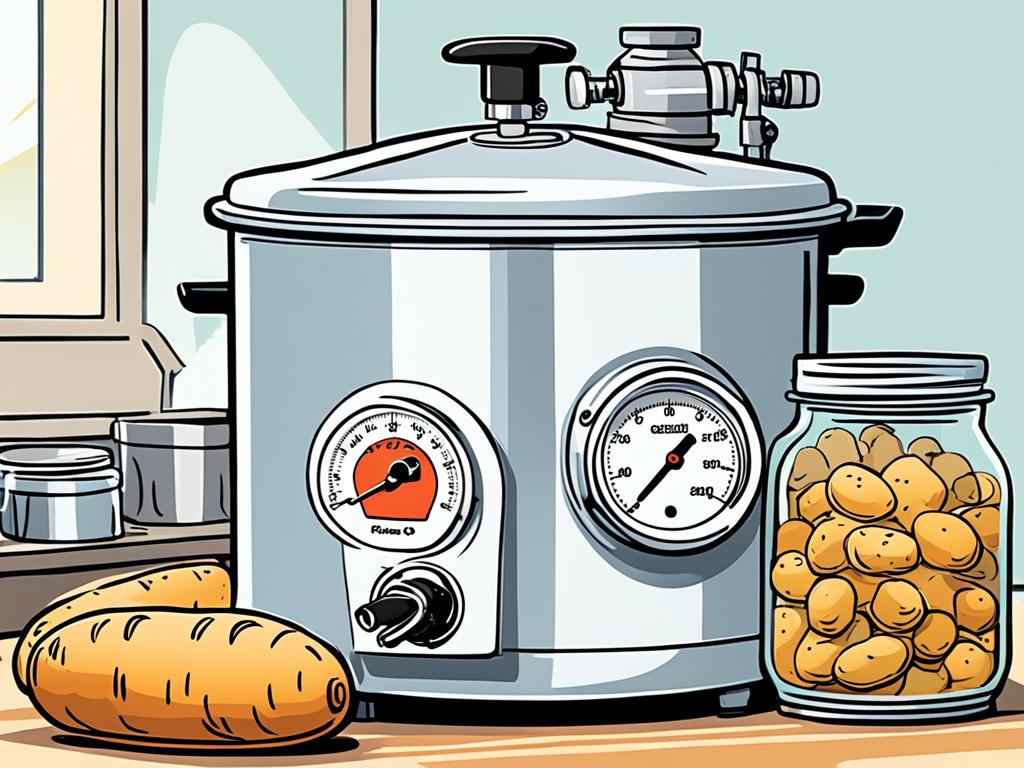
Now, ready to roll up your sleeves and get those potatoes bathed and bottled? Let’s move onward to uncovering the how-to’s of selecting and prepping your trove of tubers. After all, a well-stocked pandemic pantry isn’t just a collection of foods—it’s a pantry packed with knowledge, care, and a dash of cunning domestic prowess.
Step-by-Step Guide: Selecting & Prepping Your Potatoes
Alright, let’s roll up those sleeves and get to the nitty-gritty of preparing potatoes for canning. We’re not just throwing tubers into jars willy-nilly; there’s an art to picking and prepping these starchy gems to ensure your pantry is stocked with nothing but the best.
Choosing the Right Variety for Canning
You might think a potato is a potato, but oh, you’d be mistaken. For canning, you want to cozy up to boiling potatoes. Varieties like Yukon Gold or Red Potatoes are your new best friends—they hold their shape and texture far better than starchy Russets when pressure canner-bound.
Cleaning, Peeling, and Slicing for Optimal Canning Results
First, you perform the potato triage. Select firm, spotless potatoes because nobody likes a soft spud, not in this lifetime. Give them a good scrub to get rid of any lurking bacteria; we want clean eats, not a bacteria feast. When it’s peeling time, don’t skimp—every bit of skin must go to prevent botulism’s unwelcome appearance at your dining table.
Here’s where it gets hot: Dunk those potato chunks in a boiling dance for just a few minutes. This crucial step is not only a rite of passage for your potatoes into adulthood but also enhances their safety and ensures they’ll maintain their dignified texture among the jars. Let’s get a closer look at these steps in our handy table below:
| Step | Details | Tips |
|---|---|---|
| Selection | Choose firm boiling potatoes. | Opt for smaller potatoes for uniform size. |
| Cleaning | Wash thoroughly to remove dirt. | Use a vegetable brush for best results. |
| Peeling | Peel completely to remove potential bacteria. | Keep peeled potatoes in water to prevent browning. |
| Slicing | Cut into even chunks or slices. | Uniform size promotes even cooking. |
| Boiling | Parboil to prep for canning. | Don’t overcook; just a few minutes will do. |
Remember, home canning tips like these aren’t just for showing off at potlucks; they’re the difference between a successful canning season and a pantry full of potato mush. So, take it step by step, respect the process, and your shelf will soon be the epitome of canned potato excellence.
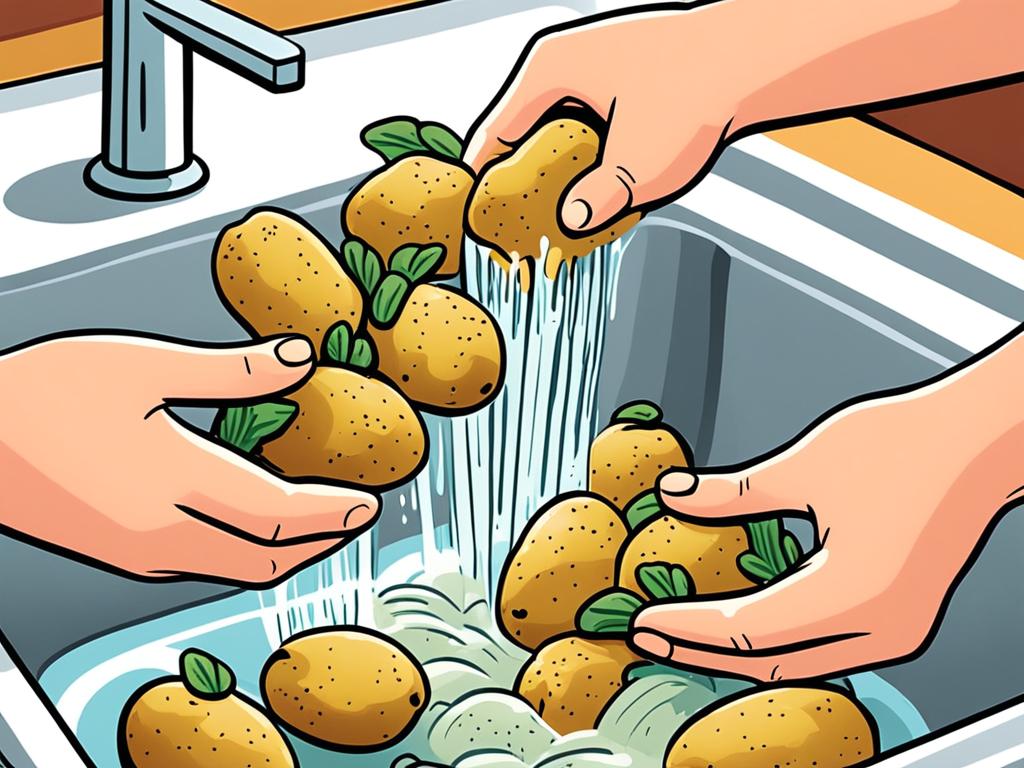
Bravo! You’re now primed to pick and prep like a pro. With these steps tucked into your apron pocket, boiling potatoes will transition seamlessly from soil to shelf, all ready to pop open for your next culinary adventure.
Understanding the Importance of Pressure Canning Potatoes
So you’ve decided to harness the art of pressure canning potatoes, and you’re about to see why it’s a game-changer. No more playing hot potato with food safety! It’s key to grasp the gravity of this preservation method, especially since potatoes are part of the low-acid foods club. But why all the fuss? Let’s boil it down to the science of safety.
The Science Behind Safety: Why Pressure Canning is Essential
Potatoes, being starchy little delights, are a hotbed for microorganisms if not properly processed. We’re talking about botulism prevention, the superhero of canning; a caped crusader that ensures your food is safe from clostridium botulinum, the bacteria behind botulism. The secret weapon? Pressure canning’s ability to reach the high temperatures needed to obliterate bacteria that boiling water is too bashful to confront. Thanks to the essential canning guidelines provided by authorities like Penn State University Extension, you’ve got the playbook for preservation safety right at your fingertips.
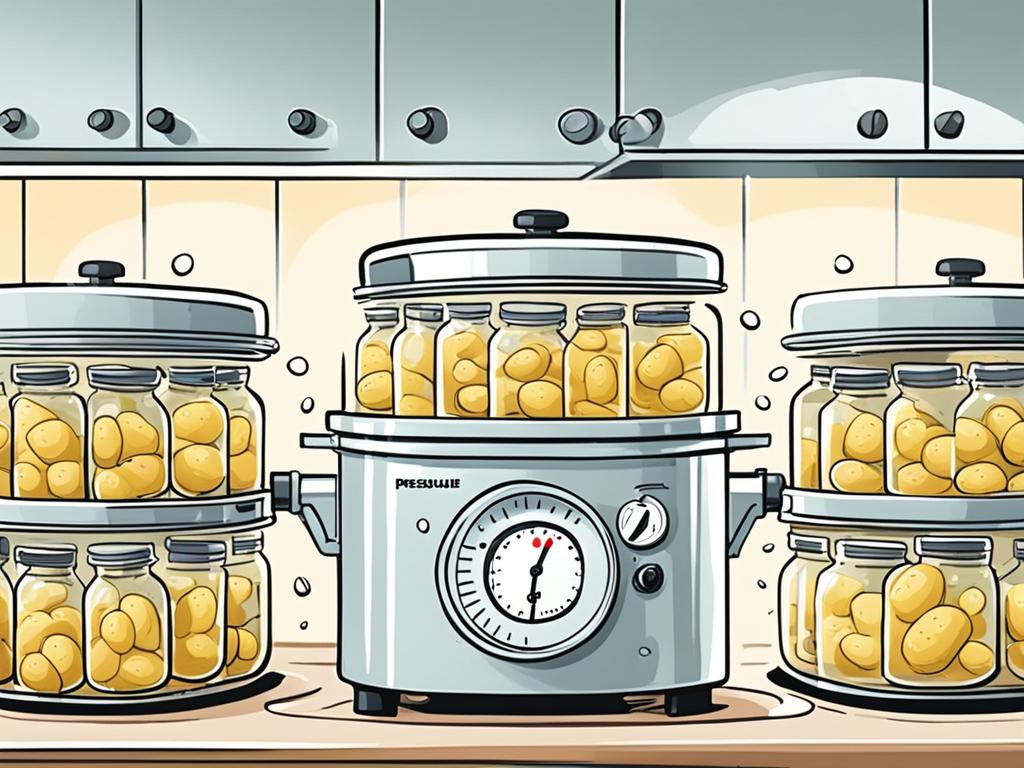
Think of pressure canning as the grand poobah of the preservation world—without it, your potatoes might as well be a science experiment gone awry. This method is a must-do, non-negotiable, no-ifs-ands-or-buts about it. Remember, these guidelines aren’t just a bunch of hot air; they’re the blueprint for keeping those spuds scrumptiously safe on your shelf.
| Preservation Method | Temperature | Microbial Elimination | Appropriate for Low-Acid Foods? |
|---|---|---|---|
| Boiling Water Canning | Up to 212°F (100°C) | Eliminates some bacteria, yeasts, and molds | No, not for low-acid foods like potatoes |
| Pressure Canning | Up to 250°F (121°C) | Eliminates all bacteria including botulinum spores | Yes, essential for low-acid foods |
Now, before you think I’m just pressure-cooking up some drama, let’s be clear: there’s a hefty weight behind every canning guideline. Your grandmother’s method might pull at your heartstrings, but if it’s not up to today’s safety snuff, you gotta let that go. We’re preserving potatoes, not traditions, after all.
And so, the route to impeccable preserved potatoes lies in respect for the pressure canner—a marvel of culinary security. Chuck those low-acid darlings into the canner with confidence, and watch as they emerge ready to take their place among your most treasured pantry staples. Let’s just say, in the realm of canning, pressure’s your pal!
Equipment Essentials: Pressure Canners Explained
Whether you’re a seasoned home canning enthusiast or a newcomer eager to dive into the world of food preservation, understanding the different types of pressure canners is crucial. Your choice can greatly influence the efficiency and ease of your canning endeavors. Let’s unpack the nitty-gritty of stovetop pressure canners and electric pressure canners to aid in your quest for picking top-notch canning equipment.
Manual vs. Electric Pressure Canners
You stand before a crossroads: the classic stovetop pressure canner, a timeless ally in the quest for perfect preserves, or the modern electric pressure canner, a wizard with buttons and beeps. The stovetop model demands your vigilance — an eye on the pressure gauge, an ear attuned to the hiss of steam. The electric contender, on the other hand, whispers sweet nothings of convenience and automation. What will it be, canning compadre?
Pros and Cons of Different Canner Types
Every hero’s journey has its trials and treasures. In the realm of canning, your treasure is the perfect jar of preserves, and your trials? Choosing the canner that best suits your needs. Behold, the list of virtues and downfalls for each.
| Pressure Canner Type | Pros | Cons |
|---|---|---|
| Stovetop Pressure Canner |
|
|
| Electric Pressure Canner |
|
|
Remember, the stovetop pressure canner, like a trusty steed, will get you through the biggest hauls of harvest with grace. Yet, the electric pressure canner, sprightly and smart, will make each adventure less arduous with a little buzz and a click.
Your choice in canning equipment is a statement of your style and ambition in the kitchen. Will you go for the grandeur of the stovetop model or embrace the ease of the electric? Choose wisely, for your jars of golden treasures await.
Canning Potatoes: The Process
Think you’ve got what it takes to become a potato canning maestro? Well, roll up your sleeves because we’re diving into the nitty-gritty of pressure canning how-to. You’re about to turn those humble spuds into shelf-stable treasures using a trusted potato canning recipe. Whether you’re aiming for a pantry filled with savory preserving white potatoes or just looking to get crafty in the kitchen, stick with me, and you’ll be stocking up like a seasoned pro.
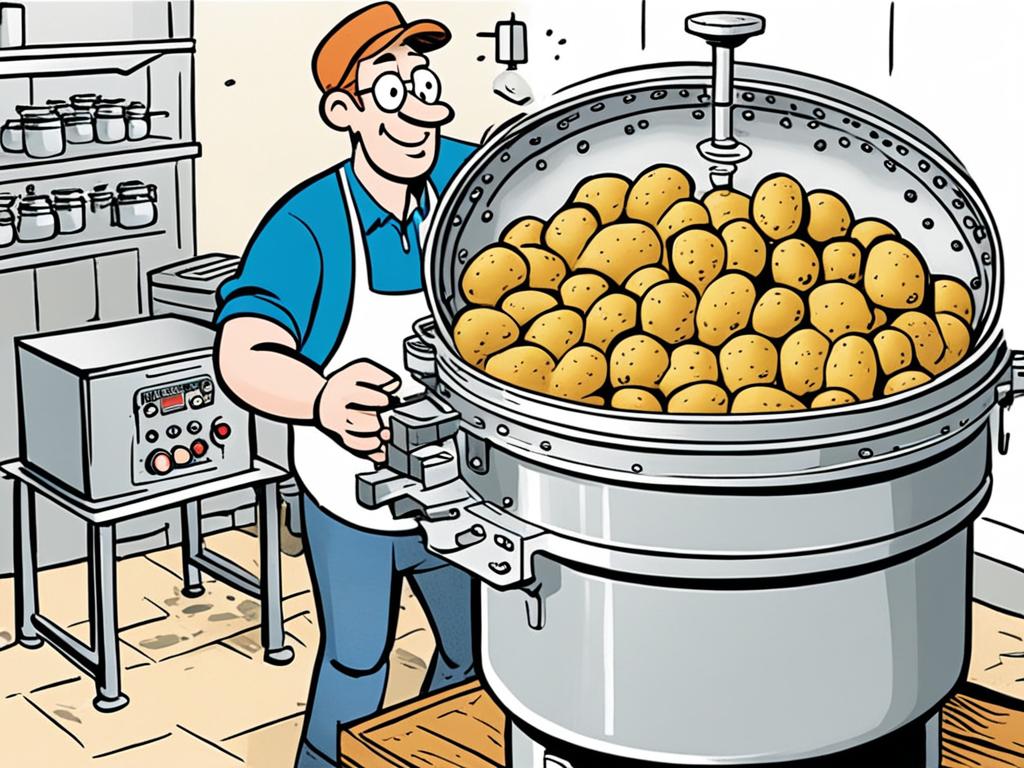
Before you start daydreaming about all the cozy dishes those canned potatoes will star in, make sure you have your canning gear lined up. You’ll need jars with their trusty sidekicks, the lids, a reliable pressure canner, and the usual suspects – a jar lifter, funnel, and bubble remover/headspace tool. Now, let’s talk potatoes!
After giving your spuds a thorough scrub and a neat peeling session, chop them up into uniform pieces. Remember, consistency is key not just in size, but in following each step meticulously to ensure your potatoes are as cozy in their jars as they are in your future stews. Place the sliced potatoes in a pot, cover them with water, bring to a boil, then simmer for a good 10 minutes. Trust me, this little hot bath preps them for canning success.
Once your potatoes are parboiled and cooler than a polar bear’s toenails, it’s jar time. Go ahead, pack those spuds into the jars, throw in a pinch of salt for luck (and flavor), and top them off with hot water, ensuring you leave about one inch of headspace. Always wipe the rim with a clean cloth before placing the lid on top – no one wants their hard work ruined by a sneaky chip of potato blocking a solid seal.
- Potato Prep – Clean, peel, and chop
- Parboiling – A 10-minute simmer
- Jar Packing – Spuds in jars with a dash of salt
- Adding Water – Top up with hot water, maintaining one inch of headspace
- Sealing the Deal – Lids on, rims wiped clean
Next up, it’s processing time in your pressure canner. Follow the manufacturer’s instructions because, contrary to what your funky jam sessions might suggest, improvisation and canning don’t mix. Adhere to the recommended processing time and pressure settings like a rhythm to your favorite tune.
Once the timer dings and the pressure drops, cool your jets – literally. Let the canner cool down on its own accord before you pop it open. Because patience is not just a virtue; it’s a vital ingredient in canning perfection. Gently remove your jars using a jar lifter and set them on a towel away from drafts to cool for 24 hours. The ‘pings’ of the lids sealing will be music to your ears!
And there you have it, your very own orchestra of preserved potatoes, ready to jazz up your meals anytime. So, when you boast about your pantry filled with the fruits (or should I say tubers) of your labor, remember that it’s the methodical process and meticulous care that got you there. Let’s raise a jar to that!
Wasn’t that a rewarding adventure? You’re now well-versed in the art of potato preservation. No need to wait for a blue moon to enjoy those tasty tubers; thanks to your new-found canning skills, they’re just a pantry raid away. Keep spreading those spud vibes and maybe teach a friend or two – it’s the kind of pressure everyone will love!
The Secret to Perfectly Canned Spuds: Boil and Brine
Achieving the ultra-comfort of a pantry stocked with jars of beautifully canned potatoes starts with a simple, but crucial ballet of boiling and brining. And yes, you guessed it – the lead dancers are none other than the famed potato parboiling technique and the artful craft of canning liquid preparation.
How to Parboil Potatoes for Canning
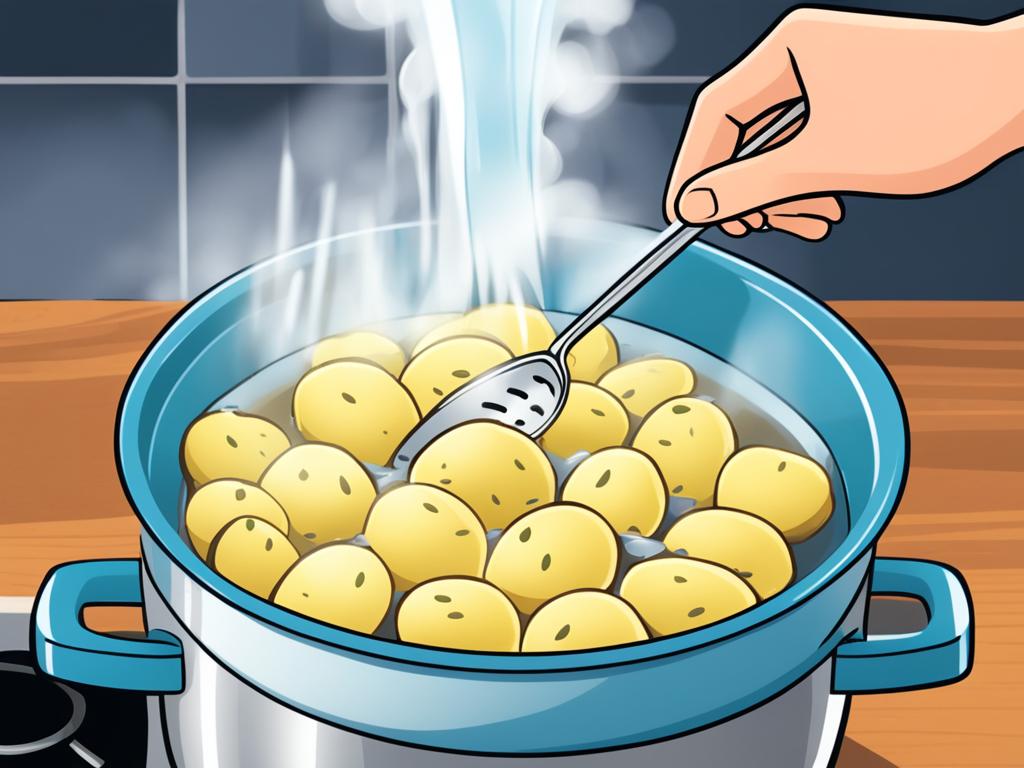
Before you jump into the brining pool, let’s dance through parboiling. Here’s the lowdown: Parboiling isn’t just boiling potatoes for the fun of it. This nifty potato parboiling technique is like a pre-show for your spuds, removing excess starch and giving them a gentle softness – all without cooking them completely. Because remember, the canning stage is their final performance, and you don’t want them overdone.
Tip: Parboil those taters until they’re just starting to soften. They’ll finish cooking in the jars, nestled comfortably in their briny hot tub.
Creating the Perfect Brine: Salt and Seasoning
Now, let’s concoct that perfect brine, the fluid that gives life to otherwise bland potatoes, transforming them into jars of savory delight. What’s the key? Balance! You’ll need water, a generous helping of canning salt, and, if you’re in the mood, a whisper of garlic or your favorite herbs for that extra oomph. Brining potatoes is not just about taste, it’s also about preservation. Below is your guide to mix the elixir of the canning gods:
- Start with a gallon of water in your cauldron (or pot, if you’re less dramatic).
- Add one cup of canning salt – it dissolves like a dream and doesn’t cloud your brine.
- Feel free to toss in a few cloves of minced garlic, a sprig of dill, or a shake of seasoning for that gourmet touch.
- Bring to a boil, then let it simmer upon your stovetop stage.
Once your jars are packed with potatoes, pour the hot brine over them, blessing each with an inch of headspace. Seal them tightly – no air invited to this potato party. The grand finale? A pressure canner performance that seals in perfection.
Bravo! You’ve mastered the canning liquid preparation, deftly handled the potato parboiling technique, and curated a brining concoction sure to win the hearts of future diners. Open a jar, and take a bow – your perfectly preserved potatoes are ready to join any meal with a standing ovation.
Versatile Dishes with Canned Potatoes
Let’s crack open the versatility of those canned potatoes gathering dust in your pantry. Imagine whipping up meals that make your taste buds dance while keeping prep time minimal. It’s all about making easy home cooking a delightful reality. Here’s how you turn those canned spuds into a feast of versatile potato dishes without breaking a sweat.
From Hearty Soups to Delicious Croquettes
There’s nothing like a bowl of warm, hearty soup to soothe the soul, especially when it’s made with home-canned potatoes. But don’t stop there! With a little creativity, those same spuds can transform into golden, crispy croquettes that’ll have family and friends begging for your secret recipe.
Creating Quick and Easy Meals Using Your Canned Potatoes
You’ve seen them, those canned potatoes on your shelf, and you may have wondered, “What on Earth can I make with these?” Fear not! Turn those humble canned potatoes into delectable mashed potato wonders, sizzling home fries, or even savory potato cakes with a fraction of the effort usually required.
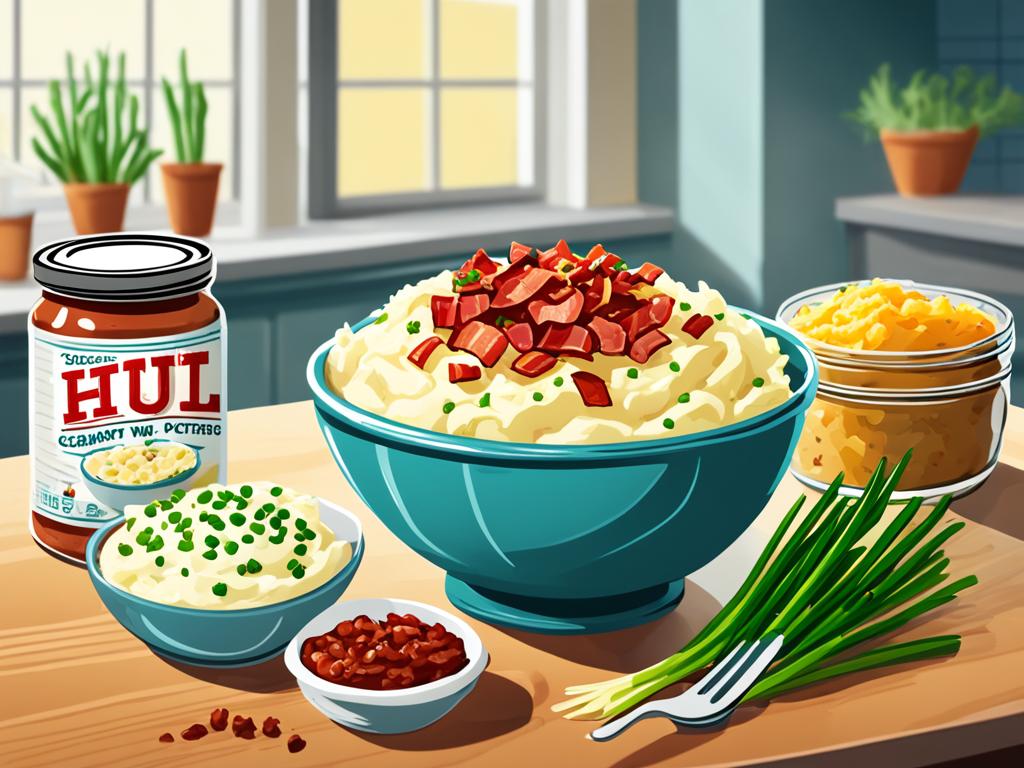
Harness the power of canned potato recipes; they’re a golden ticket to quick, nutritious, and mouth-watering meals that’ll salvage your time and energy. Imagine, within minutes, creating dishes that taste like they’ve simmered for hours. Now, roll up your sleeves, because it’s time to turn canned convenience into gourmet goodness.
Safety First: Do’s and Don’ts of Canning Potatoes
When you’re getting ready to can those lovely tubers, it’s like preparing for a kitchen ballet. Grace and precision are key, with pressure canning safety as your principal dance partner. To pirouette successfully around any potential pitfalls, let’s step through a few important do’s and don’ts to keep your canning performance flawless.
Common Mistakes to Avoid
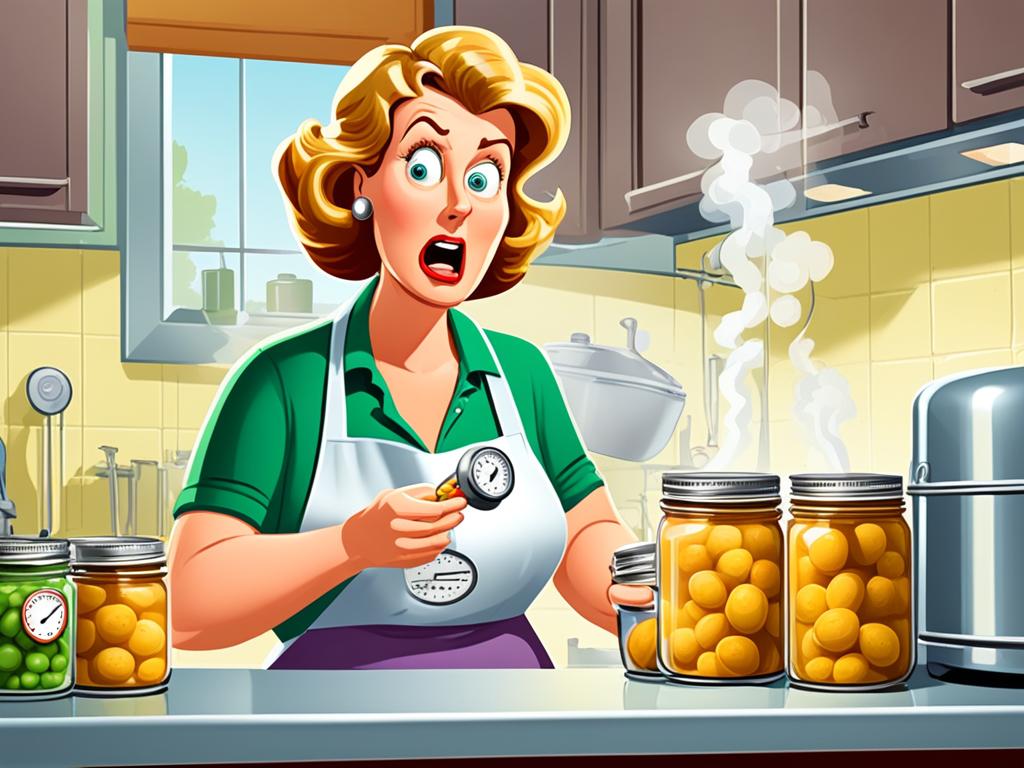
You don’t want to be the one with spoiled spuds, right? To make sure you’re on top of your canning game, sidestepping missteps is vital. From not keeping tabs on your pressure gauge to cramming jars too full, these avoidable blunders can lead to less than perfect preserves. And remember, no cutting corners on timings — your patience will be rewarded with the perfect potato.
Ensuring Proper Sterilization and Seal
A squeaky clean start leads to a splendid seal. Sterilizing your canning tools and securing jar seals are your safety sealants in this process. It’s all about hygiene-happy procedures to keep those spuds in tip-top condition. You wouldn’t want any microscopic menaces crashing your potato party, after all.
Remember: “An unsealed jar is a dinner invitation for bacteria; better secure that lid like your pantry depends on it!”
Let’s take a gaze at this handy table for a snapshot of best practices:
| Do’s | Don’ts |
|---|---|
| Sterilize all equipment before canning | Use damaged jars or old sealing lids |
| Follow pressure canning time guidelines meticulously | Under-process or overfill the jars |
| Check the seal after jars have cooled | Ignore testing the pressure gauge for accuracy |
| Let the pressure canner cool naturally | Attempt to hurry the cooling process |
| Store canned potatoes in a cool, dark place | Expose canned goods to direct sunlight or damp conditions |
So there you have it — keep these tips in mind and you’re sure to be the belle of the ball in the pressure canning waltz, effortlessly avoiding canning errors and securely sealing in potato perfection. Just whisper to yourself, “pressure canning safety,” and let the canning commence!
Conclusion
By embracing the rewarding practice of home canning, you’ve unlocked the joy of having a robust supply of potatoes, a versatile and comforting staple, available at your fingertips all year. The art of preserving potatoes through pressure canning not only grants you **year-round potato availability**, but it is also a toast to your dedication in achieving *pressure canning mastery*—insuring your pantry is never without this essential ingredient. It’s about more than just ensuring a meal is on the table; it’s about deriving genuine **home canning satisfaction** from your independence in food preparations.
As you’ve journeyed through the process, from choosing the right spuds to the final act of sealing the jars, it’s clear that your efforts in the kitchen are far more than a routine task; they are an act of self-reliance. All those carefully followed steps culminate in the assurance that whether it’s a simple potato salad or a hearty stew, quality potatoes are just a shelf away, thanks to your canning proficiency.
So, savor the bounty and take pride in your newly honed skillset. With each pop of a jar lid, you are not just accessing a nourishing vegetable, but you are also celebrating a tradition that epitomizes resourcefulness and foresight. Revel in the distinct pleasure that comes from being well-stocked, thanks to your canning panache. Keep at it, and you’ll be a connoisseur of canned potatoes in no time!
FAQ
Why has home canning, particularly pressure canning potatoes, become popular again?
Well, thank you for asking, Sherlock! It’s elementary, really. This surge in popularity is thanks to folks bracing for the unexpected—like pandemic-induced shopping chaos—and wanting to ensure a consistent food supply. It’s like digging up buried treasure in your pantry whenever you crave those golden nuggets!
What makes pressure canning the go-to method for preserving potatoes?
Pressure canning is like the superhero of food preservation techniques. It swoops in to save the day, fighting off dangerous bacteria like botulism that are no match for mere boiling water canning. This method uses high temps to keep your spuds safe and shelf-stable for your future culinary escapades.
Which type of potatoes should I choose for canning to avoid the dreaded mushy outcome?
Stick with boiling potatoes, my friends—those other potatoes just can’t handle the heat! Boiling varieties can stand up to the pressure like champs, ensuring you end up with perfectly preserved non-mushy potatoes.
Are there different types of pressure canners, and if so, which one should I use?
You bet there are! You’ve got your trusty stovetop pressure canner for those who enjoy the classic feel, and the futuristic electric pressure canner for folks who appreciate a little tech in their kitchen. The right choice is like choosing between a manual or automatic car—it all depends on your need for control or convenience.
Could you break down the potato canning process for me in simple steps?
Absolutely! Imagine you’re an artist with a potato palette: First, gather your tools—jars, lids, and pressure canner. Next, lovingly prep your potatoes. Then, tuck them into jars with a kiss of seasoning and process them under pressure. Voilà, you’ve canned your masterpiece!
How do I know my canned potatoes are safe to eat, and how can I prevent canning mishaps?
Here’s the secret recipe for safety: Sterilize your gear like a germaphobe, avoid overstuffing jars like a packed suitcase, vent and cool the canner with the patience of a saint, and follow processing times like the laws of gravity. Check your canner’s dial gauge regularly—think of it as a lifeguard for your lovely spuds.
What can I whip up with my canned potatoes that’s quick and scrumptious?
You, my friend, have struck gold. Transform those canned taters into belly-warming potato soup, fluffy garlic mashed potatoes with a cheese crown, speedy home fries, or even fancy potato croquettes to impress your pals. Your pantry is now a treasure trove of possibilities!
Can you explain why it’s essential to pressure can low-acid foods like potatoes for food safety?
Gather ’round the campfire of knowledge: Low-acid foods, like our pals the potatoes, need the high-flying temperatures of pressure canning to neutralize the party-crasher known as botulism. It ensures that your jars of joy are not just delicious but also not dancing with danger.
How long can I store my beautifully canned potatoes?
If you play your cards right and follow all the canning rules to a T, you could have a stash of potatoes that will last longer than your wildest dreams—or at least a year or so. It’s like burying a time capsule full of tasty treasure in your pantry.