
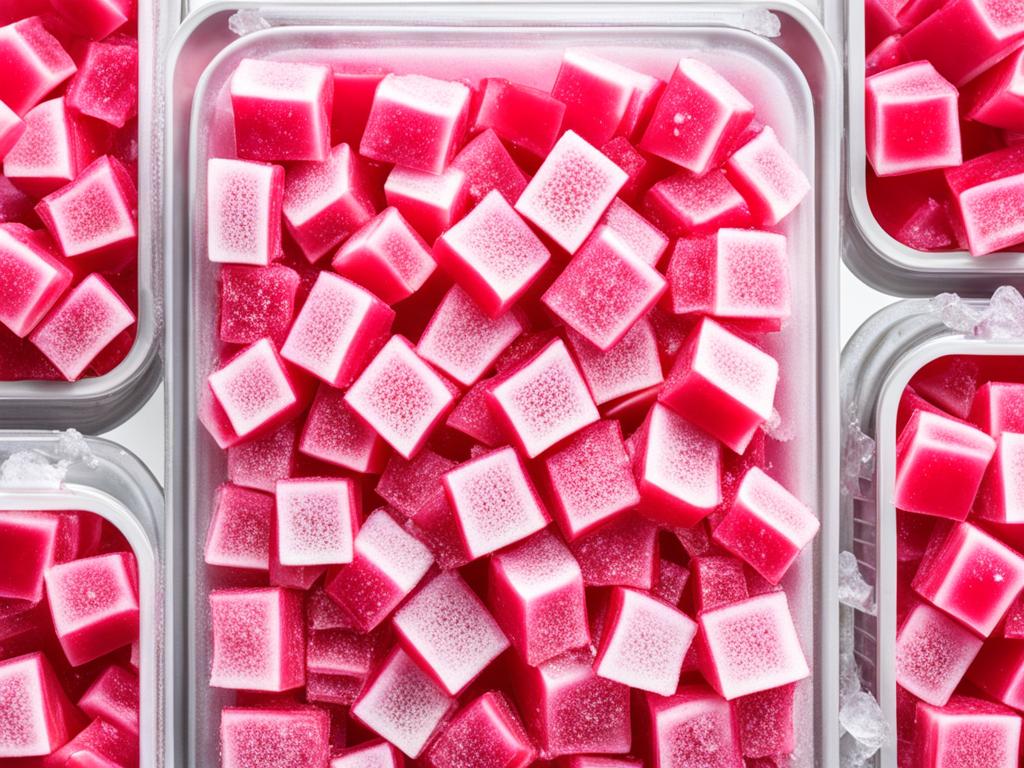
Rhubarb, with its tart and flavorful taste, is a seasonal delight that you don’t want to miss out on. But what if you could enjoy this tangy goodness year-round? Well, you’re in luck! Freezing rhubarb is a simple process that allows you to preserve its taste and texture, ensuring you have a stash of this versatile ingredient whenever you need it.
Key Takeaways:
- Freezing rhubarb is an easy way to enjoy it throughout the year.
- Freeze rhubarb raw for the best texture and color.
- Store frozen rhubarb in glass containers, jars, or zip-top bags.
- Frozen rhubarb can last 8-12 months, or even longer when vacuum-sealed.
- Frozen rhubarb is safe to eat, as the leaves, not the stalks, contain the toxic component.
Can I freeze fresh rhubarb raw?
Yes, you can freeze fresh rhubarb raw. In fact, it is recommended to freeze rhubarb raw to maintain its best texture and color. To freeze fresh rhubarb raw, follow these simple steps:
- Remove the leaves and cut off any rough ends of the rhubarb stalks.
- Rinse the stalks with cool water to remove any dirt or debris.
- Cut the rhubarb stalks into bite-sized pieces.
- Spread the rhubarb pieces out in a single layer on a rimmed baking sheet.
- Place the baking sheet in the freezer until the rhubarb is frozen solid.
By freezing fresh rhubarb raw, you can preserve its taste, texture, and vibrant color. Now, you’ll have delicious rhubarb on hand whenever you need it!
Tips for Freezing Rhubarb
| Tip | Description |
|---|---|
| Choose the best rhubarb: | Select smaller and more red-colored stalks for better flavor. |
| Prepare the rhubarb: | Remove the leaves and cut off any rough ends. |
| Rinse the rhubarb: | Give the stalks a quick rinse with cool water to remove dirt or debris. |
| Cut into pieces: | Cut the rhubarb into bite-sized pieces for easy thawing and use. |
| Spread out on a baking sheet: | Place the rhubarb pieces in a single layer on a rimmed baking sheet. |
| Freeze until solid: | Put the baking sheet in the freezer until the rhubarb is frozen solid. |
By following these tips, you can ensure that your frozen rhubarb retains its taste and texture, allowing you to enjoy its tangy goodness all year round!
How do I store frozen rhubarb?
After freezing rhubarb, it is important to store it properly to maintain its quality. There are several storage options for frozen rhubarb:
| Storage Option | Pros | Cons |
|---|---|---|
| Glass Food Storage Containers | – Reusable – Looks nice in the freezer | – Takes up more space |
| Glass Canning Jars | – Reusable – Aesthetically pleasing | – Requires more storage space |
| Zip-top Freezer Bags | – Affordable – Readily available | – Single-use plastic |
| Vacuum Sealing Bags | – Saves the most space | – Requires a vacuum sealer |
Choose the storage option that works best for you, and remember to label and seal the containers or bags, removing as much air as possible for optimal freshness. Now, you can keep your frozen rhubarb perfectly stored until you’re ready to whip up something delicious!
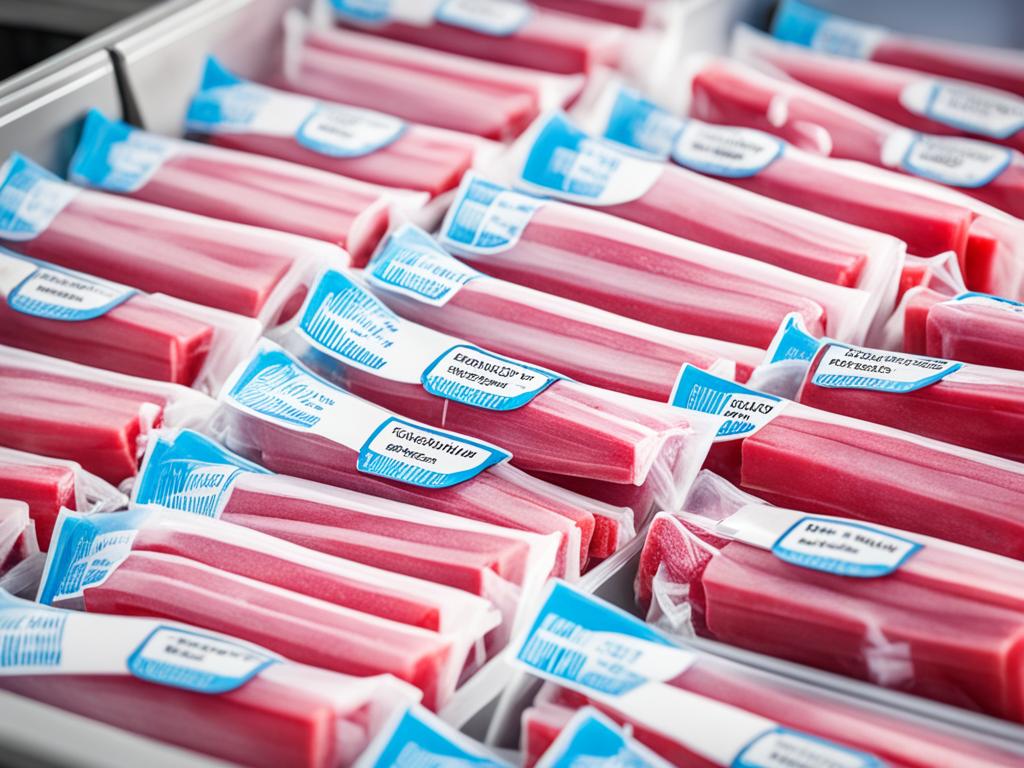
How long is rhubarb good in the freezer?
Once you’ve frozen your rhubarb, you might be wondering how long it will last in the freezer. Well, fear not! Frozen rhubarb can maintain its quality for a considerable amount of time, allowing you to enjoy its tangy goodness whenever you please.
When stored in glass containers, jars, or zip-top bags, frozen rhubarb can stay good in the freezer for 8-12 months. That’s nearly a year of rhubarb-packed delights waiting for you! But wait, there’s even more good news if you have a vacuum sealer. By vacuum-sealing your rhubarb, you can extend its shelf life to an impressive 2-3 years.
Now, although frozen rhubarb can remain safe to eat beyond these time frames, its quality may begin to deteriorate over time. To ensure the best taste and texture, it’s recommended to use your frozen rhubarb within the recommended storage period.
| Storage Method | Shelf Life |
|---|---|
| Glass Containers, Jars, or Zip-Top Bags | 8-12 months |
| Vacuum Sealed | 2-3 years |
Understanding the shelf life of frozen rhubarb allows you to plan accordingly and make the most out of this versatile ingredient. So, go ahead and stock up on rhubarb when it’s in season, freeze it like a pro, and whip up delightful treats throughout the year!
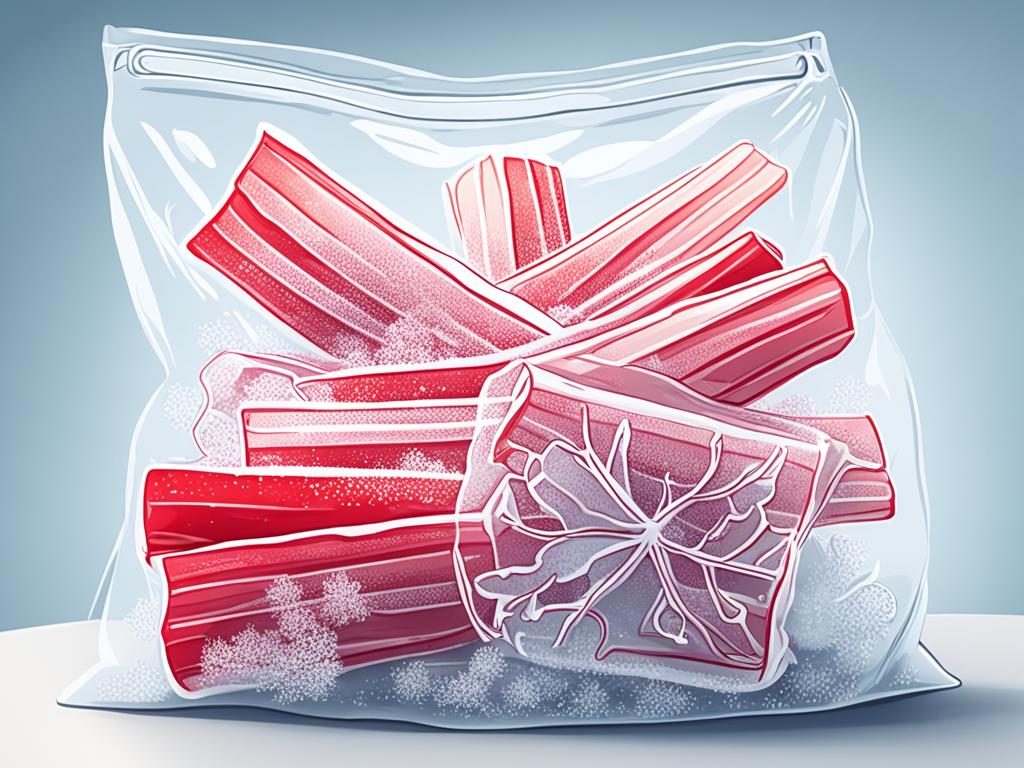
Wait though. Isn’t frozen rhubarb poisonous?
While it is true that rhubarb leaves contain high levels of oxalic acid, which can be toxic to humans, frozen rhubarb is perfectly safe to eat. The poisonous part of rhubarb is the leaves, not the stalks. When a rhubarb plant gets hit by a freeze, the oxalic acid from the leaves moves down into the stalks, making them heavy in the toxin. However, when freezing rhubarb, the leaves are removed beforehand, eliminating any risk. Therefore, frozen rhubarb is safe to consume and enjoy without any concerns.
Now that I know how to freeze rhubarb, give me some tips for how to use it!
Once you have frozen rhubarb on hand, you can unlock a world of culinary possibilities. Don’t let your frozen rhubarb gather frost in the depths of your freezer—put it to good use in these delicious recipes and make the most of its tangy goodness! There’s no need to defrost the rhubarb before using it in jams, crumbles, or crisps. Simply substitute frozen rhubarb for fresh rhubarb at a 1:1 ratio in recipes that call for it.
Jam it Up!
Rhubarb is an excellent addition to jams and spreads, bringing a unique tang to the sweet notes. Try making a batch of strawberry rhubarb jam using your frozen rhubarb. Spread it on toast, use it as a filling for pastries, or even mix it into yogurt for a burst of flavor.
Sweet Treats Galore
Indulge your sweet tooth with recipes like strawberry rhubarb pie squares or an easy rhubarb crisp. These desserts are the perfect way to showcase the tartness of rhubarb alongside sweet and buttery flavors. Serve them warm with a scoop of vanilla ice cream for the ultimate dessert experience.
Sip and Savor
Quench your thirst and enjoy the tangy flavor of rhubarb with refreshing beverages. Whip up a berry rhubarb punch for a crowd or create a cherry rhubarb margarita for a festive twist on a classic cocktail. These drinks are sure to impress your guests and leave them craving more.
Surprisingly Savory
Think beyond the dessert table and incorporate frozen rhubarb into savory dishes. For a unique flavor combination, try a rhubarb breakfast cake that pairs rhubarb’s tartness with the sweetness of cinnamon and sugar. Or experiment with a rhubarb jam with black pepper and cardamom to add a spicy kick to your favorite savory dishes. For those who enjoy a touch of tanginess in their meats, a crispy rhubarb lemon chicken bake can take your weeknight dinners to the next level.
As you can see, frozen rhubarb is a versatile ingredient that can be used in a wide range of recipes. Don’t be afraid to get creative and try new flavor combinations. With these tips and recipes, you’ll be able to make the most of your frozen rhubarb stash and enjoy its tangy goodness all year round!
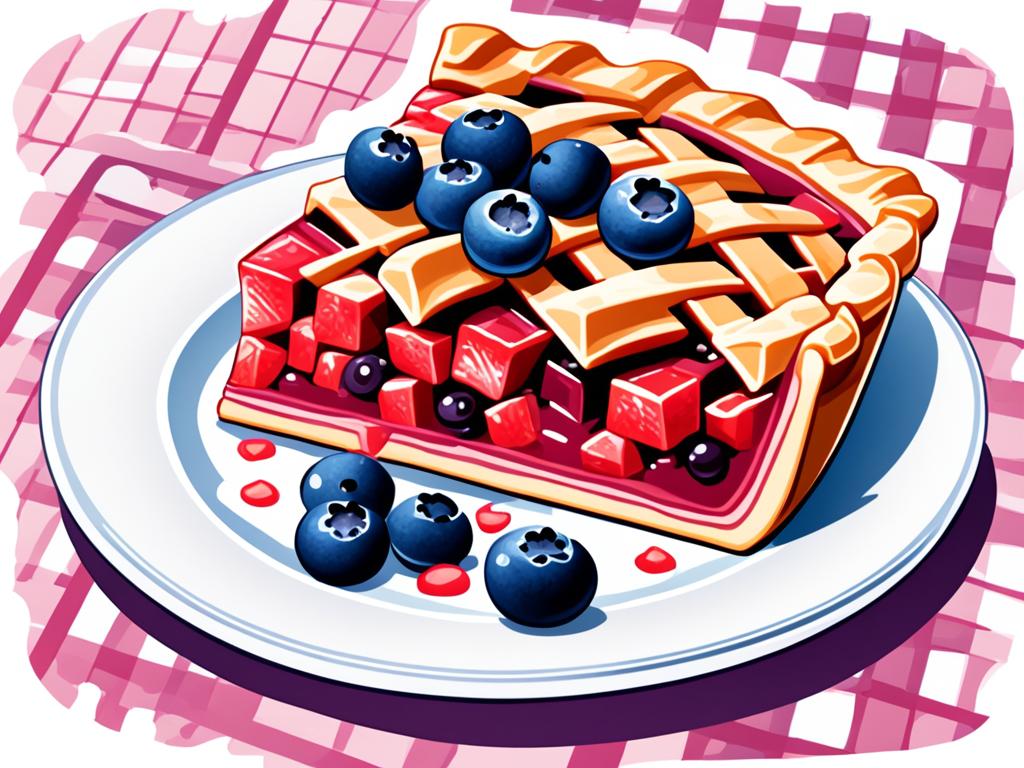
How to Freeze Rhubarb – Recipe
Freezing rhubarb is a simple process that allows you to enjoy this tangy ingredient all year round. Whether you want to make delicious pies, tangy jams, or refreshing cocktails, having frozen rhubarb on hand is a game-changer. Follow this step-by-step guide on how to freeze rhubarb like a pro:
Gather Your Ingredients:
- 1 pound rhubarb
Step 1: Prepare the Rhubarb
Start by cleaning and trimming the rhubarb stalks. Rinse them under cold water, then pat them dry with a clean towel. Remove any leaves or rough ends.
Step 2: Cut Into Bite-Sized Pieces
Using a sharp knife, slice the rhubarb stalks into bite-sized pieces. Aim for uniform sizes, as this will help with even freezing.
Step 3: Blanch the Rhubarb (Optional)
Blanching the rhubarb before freezing can help preserve its color and texture for a longer period. Bring a pot of water to a boil and prepare an ice water bath. Carefully drop the rhubarb pieces into the boiling water and let them cook for about 1 minute. Then, transfer them immediately to the ice water bath to halt the cooking process. Drain the rhubarb and let it dry before proceeding to the next step.
Step 4: Arrange the Rhubarb on a Baking Sheet
Place the rhubarb pieces in a single layer on a baking sheet lined with parchment paper or silicone mat. Make sure the pieces don’t touch each other, as this will prevent them from sticking together during freezing.
| Step | Image |
|---|---|
| Step 3: Blanch the Rhubarb (Optional) | 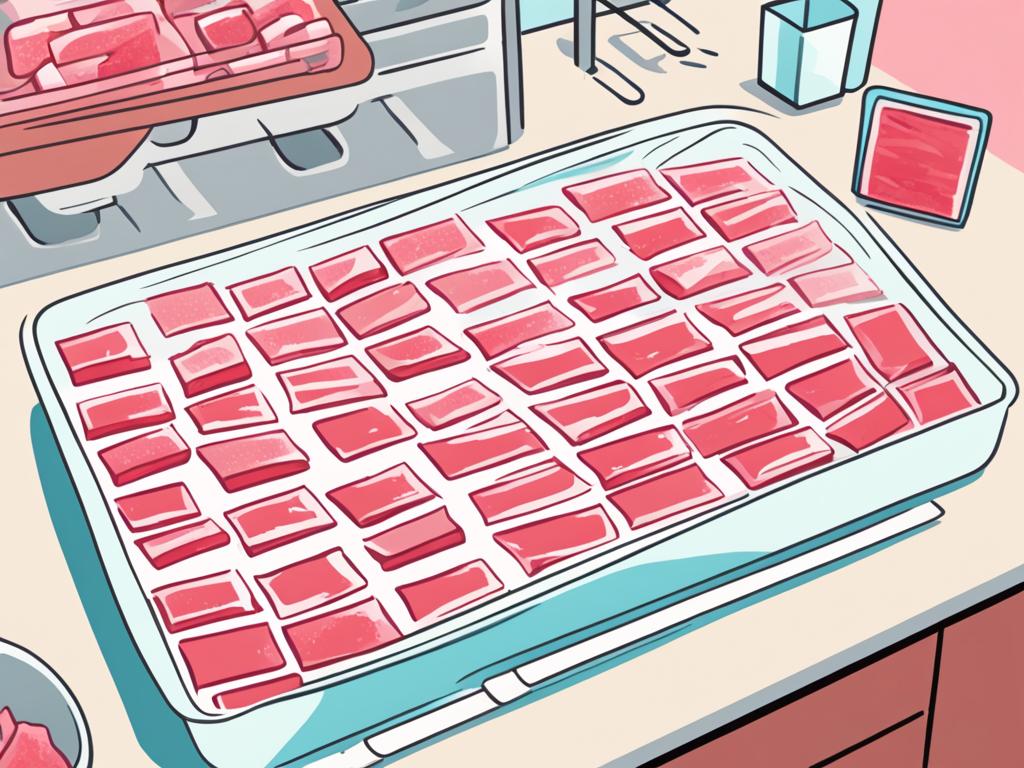 |
Step 5: Flash Freeze
Place the baking sheet with the rhubarb in the freezer and let it freeze for a few hours or until the pieces are solid. This quick freezing method helps prevent the rhubarb from forming clumps, making it easier to use later on.
Step 6: Transfer to Freezer-Safe Containers
Once the rhubarb is frozen, transfer the pieces to freezer-safe containers, such as resealable plastic bags or airtight containers. Be sure to label the containers with the date and the quantity of rhubarb inside.
Step 7: Store in the Freezer
Place the labeled containers in the freezer and store them at a consistent temperature of 0°F (-18°C) or below. Frozen rhubarb can typically be stored for up to 12 months, but for the best quality, try to use it within 8 months.
Now that you know how to freeze rhubarb like a pro, you’ll never have to worry about missing out on this tart and flavorful ingredient when it’s out of season. With your freezer stocked with frozen rhubarb, you can indulge in your favorite rhubarb recipes any time you want!
How to Freeze Rhubarb – Raw or Cooked?
When it comes to freezing rhubarb, you have a choice: freeze it raw or cooked. Both methods have their pros and cons, so let’s explore your options.
Freezing Raw Rhubarb: Preserving the Best Texture and Color
Freezing rhubarb raw is the preferred method if you want to maintain the texture and vibrant color of the stalks. By freezing it raw, you lock in the natural crispness and freshness of the rhubarb.
Pro Tip: Freezing raw rhubarb is ideal for shorter storage periods, such as up to 3 months.
To freeze raw rhubarb, start by removing the leaves and any rough ends. Rinse the stalks with cool water and then cut them into bite-sized pieces. Spread out the rhubarb pieces in a single layer on a rimmed baking sheet, ensuring they are not touching each other, and place the sheet in the freezer. Once the rhubarb is frozen solid, transfer the pieces to airtight containers or freezer bags for long-term storage.
Blanching Rhubarb: Extended Shelf Life for Longer Storage
If you plan to store your rhubarb for more than 3 months, blanching it before freezing is recommended to maintain its quality. Blanching involves briefly boiling the rhubarb and then cooling it in an ice bath before freezing.
Pro Tip: Blanching rhubarb deactivates enzymes that can lead to changes in texture and flavor over time.
To blanch rhubarb, bring a pot of water to a boil and carefully add the rhubarb stalks. Let them boil for 1-2 minutes, then remove them and immediately transfer them to an ice bath to stop the cooking process. Once cooled, pat them dry and freeze them using the same method as raw rhubarb.
Freezing Cooked Rhubarb: Convenience and Versatility
If you prefer the convenience of having pre-cooked rhubarb on hand, you can also freeze it after cooking. Roasting or stewing rhubarb before freezing can be a delicious option, especially if you plan to use it in desserts or sauces.
Pro Tip: Freezing cooked rhubarb is a great choice if you want to save time when using it in recipes.
To freeze cooked rhubarb, simply let it cool to room temperature after cooking, then transfer it to airtight containers or freezer bags. Make sure to leave some headspace in the containers or bags to allow for expansion during freezing.
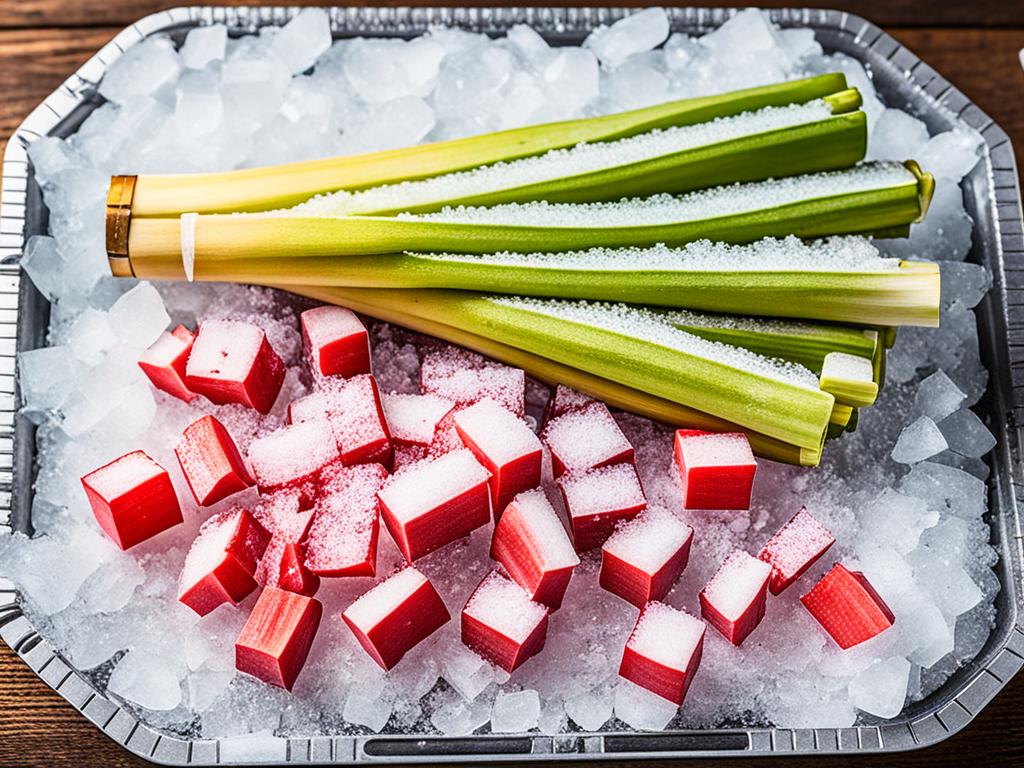
The Pros and Cons of Freezing Rhubarb Raw or Cooked
Here’s a quick rundown of the pros and cons of freezing rhubarb raw and cooked:
| Freezing Method | Pros | Cons |
|---|---|---|
| Freezing Raw |
|
|
| Blanching |
|
|
| Freezing Cooked |
|
|
Both raw and cooked rhubarb can be successfully frozen, so choose the method that best suits your needs and preferences. Whether you want to preserve the fresh texture, extend the shelf life, or enjoy the convenience of pre-cooked rhubarb, freezing allows you to enjoy this tangy delight all year round.
Tips for Freezing Rhubarb
When it comes to freezing rhubarb, a few handy tips can make all the difference in preserving its flavor and texture. Whether you’re a seasoned freezer or a beginner, these tips will help you freeze rhubarb like a pro.
1. Choose the Best Rhubarb for Freezing
For optimal flavor, look for smaller stalks that are more red in color. These stalks tend to be sweeter and have a more intense flavor, making them ideal for freezing. So, when you’re at the market, keep an eye out for those vibrant red stalks that will bring out the best in your frozen rhubarb.
2. Blanch Rhubarb for Longer Storage
If you plan to store your rhubarb for longer than 3 months, consider blanching it before freezing. Blanching deactivates the enzymes in rhubarb that can affect its quality over time. To blanch rhubarb, simply bring a pot of water to a boil, gently place the rhubarb into the boiling water for 1-2 minutes, and then transfer it to an ice bath to cool. Once cooled, drain the rhubarb and pack it into your chosen freezer-safe containers or bags. Blanching may require an extra step, but it’s worth it for longer-lasting, high-quality frozen rhubarb.
3. Raw or Cooked? The Choice is Yours
When it comes to freezing rhubarb, you have the option to freeze it raw or cooked. Freezing raw rhubarb is great for shorter storage periods, as it helps maintain the fresh flavor and texture of the stalks. On the other hand, if you’re planning on storing your rhubarb for an extended period, cooking it before freezing can be a good option. Roasting or stewing the rhubarb before freezing can enhance its flavor and make it ready-to-use in various recipes later on. The choice between raw and cooked rhubarb ultimately depends on how you envision using it in the future.
By following these tips, you’ll be well-equipped to freeze rhubarb and enjoy its tart delights whenever you please. Remember, choose your rhubarb wisely, consider blanching for longer storage, and decide whether to freeze it raw or cooked based on your needs. With these tips in mind, you’ll be able to freeze rhubarb like a true pro.
Conclusion
Congratulations, you’ve unlocked the secret to freezing rhubarb like a pro! Now you can enjoy the tart and flavorful goodness of rhubarb all year round. By following the simple steps outlined in this guide, you can preserve rhubarb’s vibrant color and tangy taste for your future culinary adventures.
Remember, freezing rhubarb is a breeze. From removing the leaves and cutting the stalks into bite-sized pieces, to spreading them out on a baking sheet and freezing them solid, the process is as easy as pie. And speaking of pie, frozen rhubarb is a perfect ingredient for delicious treats like jams, pies, and crumbles.
So why wait? Stock up on rhubarb when it’s in season, freeze it like a pro, and enjoy the delights of this versatile ingredient all year long. Whether you’re creating a delectable rhubarb pie or adding a tangy twist to your morning smoothie, frozen rhubarb is a freezer staple that will never disappoint. So go ahead, freeze rhubarb like a pro and elevate your culinary creations to new, flavorful heights!
FAQ
Can I freeze fresh rhubarb raw?
Yes, it is recommended to freeze rhubarb raw to maintain its best texture and color. Simply remove the leaves, cut off any rough ends, rinse the stalks, cut them into bite-sized pieces, spread them out on a baking sheet, and freeze until solid.
How do I store frozen rhubarb?
You can store frozen rhubarb in glass food storage containers, glass canning jars, zip-top freezer bags, or vacuum sealing bags. Label and seal the containers or bags, removing as much air as possible.
How long is rhubarb good in the freezer?
When stored in glass containers, jars, or zip-top bags, frozen rhubarb can be kept in the freezer for 8-12 months. If vacuum-sealed, it can last for 2-3 years.
Wait though. Isn’t frozen rhubarb poisonous?
While rhubarb leaves contain a toxic component called oxalic acid, frozen rhubarb is safe to eat as long as the leaves are removed before freezing. The toxicity is found in the leaves, not the stalks.
Now that I know how to freeze rhubarb, give me some tips for how to use it!
You can use frozen rhubarb in a variety of recipes without the need to defrost it. Substitute it for fresh rhubarb at a 1:1 ratio in jams, crumbles, pies, punch, margaritas, cakes, and more.
How to Freeze Rhubarb – Recipe
Ingredients: 1 pound rhubarb. Instructions: cut rhubarb into bite-sized pieces, spread them on a baking sheet, freeze until solid, and store in sealed containers or bags.
How to Freeze Rhubarb – Raw or Cooked?
You can freeze rhubarb raw or cooked, depending on your preference. Freezing it raw preserves the texture and color, while blanching or fully cooking it is recommended for longer storage periods.
What are some tips for freezing rhubarb?
Choose smaller and more red-colored stalks for better flavor. Blanch the rhubarb if you plan to store it for longer than 3 months to deactivate enzymes that affect quality.
Can I freeze rhubarb for year-round delights?
Absolutely! Freezing rhubarb allows you to enjoy its tart flavor and vibrant color throughout the year.
How to Freeze Rhubarb Like a Pro
By following the steps outlined in this guide, you can freeze rhubarb with ease and expertise.