

Looking to add a touch of gourmet to your homegrown vegetable garden? Why not try growing brussels sprouts? These nutrient-packed veggies, often overlooked in home gardens due to their specific requirements, can be a rewarding addition to your culinary repertoire. With a little know-how and some careful nurturing, you can cultivate these delicious mini cabbages right in your own backyard.
Key Takeaways:
- Growing brussels sprouts at home offers a fresh and flavorful addition to your meals.
- Brussels sprouts are packed with vitamins, minerals, and fiber, making them a nutritious choice.
- Choose a sunny spot in your garden with well-draining soil for optimal growing conditions.
- Start from seeds or seedlings, giving them a headstart indoors for better success.
- Ensure proper care, including regular watering, mulching, and fertilization, to help your plants thrive.
Why Should You Grow Brussels Sprouts?
Brussels sprouts are not your average vegetables. They are a nutritional powerhouse and a must-have addition to your garden. These cool-season crops offer a plethora of benefits, from tantalizing taste to incredible health advantages. Let’s explore why growing Brussels sprouts is a smart and rewarding choice.
Vitamins, Minerals, and Fiber Galore
When it comes to nutrition, Brussels sprouts pack a punch. They are rich in essential vitamins like C and K, providing a natural boost to your immune system and promoting healthy blood clotting. Brussels sprouts also boast an impressive mineral profile, with significant amounts of potassium, folate, and manganese. These nutrients play a vital role in your overall well-being.
But that’s not all! Brussels sprouts are a fantastic source of dietary fiber, aiding in digestion, regulating blood sugar levels, and maintaining a healthy weight. Incorporating these nutritious vegetables into your meals is an easy way to support a well-rounded diet.
Freshness at Your Fingertips
One of the most significant advantages of growing Brussels sprouts at home is the ability to enjoy the freshest produce possible. When you harvest these delectable green gems from your own garden, you skip the lengthy transportation and storage time associated with store-bought options. The result? An unparalleled freshness that enhances both the flavor and the nutritional value of your dishes.
Whether you sauté them with garlic, roast them to crispy perfection, or use them in a comforting casserole, your homegrown Brussels sprouts will take your culinary creations to new heights of taste and satisfaction.
“There’s something incredibly rewarding about cultivating your own nutritious vegetables and witnessing the fruits of your labor in the form of mouthwatering meals.”
Perfect for Cool Seasons
Brussels sprouts thrive in the cool weather of spring and fall, making them the ideal choice for gardeners in moderate and colder climates. While they require a long growing season, the wait is entirely worth it. The cooler temperatures enhance the sweetness of the sprouts, resulting in a more pleasant flavor profile.
So, if you’re seeking a vegetable that can handle lower temperatures and add diversity to your harvest, Brussels sprouts are the perfect cool-season crop for your garden.
| Brussels Sprouts Benefits | Description |
|---|---|
| Nutritious Powerhouse | Packed with vitamins, minerals, and fiber |
| Freshness at Your Fingertips | Enjoy the unparalleled freshness of homegrown produce |
| Perfect for Cool Seasons | Thrives in cool weather for enhanced flavor |

Choosing the Right Growing Conditions
Brussels sprouts thrive in optimal growing conditions that provide them with the necessary sun exposure and soil fertility. By understanding their requirements, you can ensure a successful harvest of these delicious vegetables in your own garden.
The first consideration is sun exposure. Brussels sprouts are sun-loving plants that require at least 6 to 8 hours of direct sunlight per day. Choose a planting site that receives ample sunlight to provide the sprouts with the energy they need to grow and develop fully.
Soil fertility is another critical factor. Brussels sprouts prefer well-draining soil that is moderately fertile. To enhance the soil fertility and texture, incorporate aged manure or compost into the planting area. This will provide essential nutrients to support the growth of healthy and productive sprouts.
Additionally, Brussels sprouts thrive in soil with a pH level around 6.8. If you’re unsure of your soil’s pH, consider performing a soil test. Based on the test results, you can adjust the pH by adding suitable amendments to create the ideal growing conditions for your sprouts.
Optimal Growing Conditions for Brussels Sprouts:
- Full sun exposure of 6 to 8 hours per day
- Well-draining soil
- Moderate soil fertility
- Aged manure or compost for improved soil quality
- Ideal soil pH of around 6.8
By ensuring the optimal growing conditions for your Brussels sprouts, you provide them with the best environment to thrive and produce a bountiful harvest.

Planting Brussels Sprouts
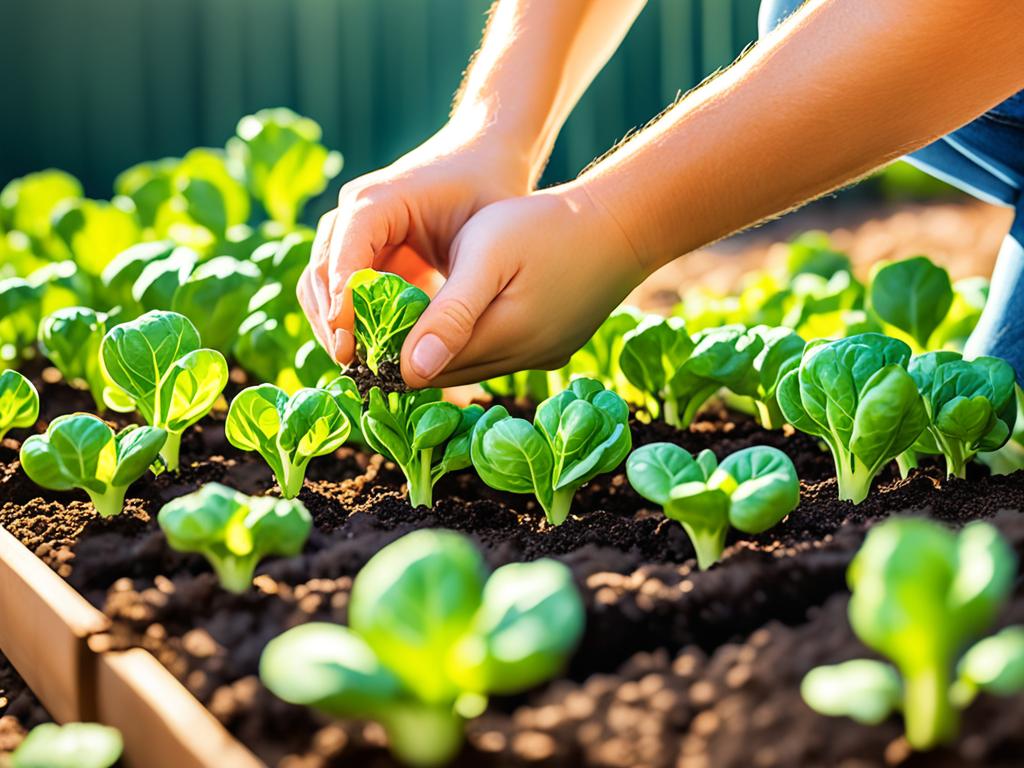
Now that you’ve chosen the optimal growing conditions for your brussels sprouts, it’s time to get your hands dirty and plant these tasty vegetables in your garden. Whether you prefer starting from seeds or seedlings, both methods have their benefits.
Sowing Seeds
If you’re starting from seeds, sow them about ½ inch deep in your garden or containers. Remember to leave enough space between the seeds, around 2 to 3 inches apart, to allow room for growth. Water the soil well after planting to ensure good moisture. Starting seeds indoors can be advantageous as it gives them a headstart and protects them from the harsh elements of summer.
Transplanting Seedlings
If you opt for seedlings, space them 12 to 24 inches apart to provide adequate spacing for their mature growth. This spacing allows each plant to receive enough sunlight, water, and nutrients. After transplanting, water the soil thoroughly to help the seedlings establish themselves in their new environment.
Remember to pay attention to the specific planting instructions provided on seed packets or plant labels, as different varieties may have slightly different requirements.
Pro Tip: It’s always a good idea to consult your local agricultural extension office or a gardening expert for specific planting advice based on your geographical location.
Now that your brussels sprouts are planted, it’s important to continue caring for them to ensure their successful growth and eventual harvest.

| Method | Benefits |
|---|---|
| Sowing Seeds | Allows for greater control over the entire growth process |
| Transplanting Seedlings | Provides a headstart and protection from summer heat |
Caring for Brussels Sprouts
Now that you have successfully planted your Brussels sprouts, it’s time to give them the care and attention they need to thrive. Caring for Brussels sprouts involves thinning plants, fertilizing, and mulching to ensure their optimal growth and development.
Thinning Plants
As your young Brussels sprout plants begin to grow, it’s important to thin them out to give each plant enough space to spread its leafy wings. Thin the plants to a distance of 12 to 24 inches apart when they reach a height of 6 inches. This spacing allows for better air circulation and prevents overcrowding, which can lead to disease and pest issues.
Fertilizing
To fuel healthy growth and abundant sprout production, fertilize your Brussels sprouts every 3 to 4 weeks with a nitrogen-rich product. Nitrogen is an essential nutrient that promotes lush foliage and strong development. Choose a fertilizer specifically formulated for vegetable gardens and follow the instructions on the package for application rates. Remember, a well-fed plant is a happy plant!
Mulching
Give your Brussels sprouts the gift of mulch! A layer of mulch around the plants serves multiple purposes. Firstly, it helps retain moisture in the soil, preventing it from drying out and keeping your plants happy and hydrated. Secondly, it acts as a natural insulator, regulating the soil temperature and protecting the roots from extreme fluctuations. Apply a 3-inch layer of mulch, such as straw or shredded leaves, around the base of each plant.
| Benefits of Mulching: | Types of Mulch: |
|---|---|
| – Retains moisture | – Straw |
| – Regulates soil temperature | – Shredded leaves |
| – Suppresses weed growth | – Bark mulch |
| – Improves soil structure | – Wood chips |
Watering
Consistent moisture is key to the success of your Brussels sprouts. These plants prefer a moist environment, so water them regularly to keep the soil evenly moist. Avoid overwatering, as it can lead to root rot and other fungal diseases. Provide deep and thorough soaks, aiming for about one inch of water per week, depending on your climate and rainfall.
Dealing with Pests and Diseases
Even the sturdiest of brussels sprout plants can fall victim to pesky pests and diseases. To protect your crop and ensure a healthy harvest, it’s important to be aware of the common issues that can arise. Brussels sprouts are particularly prone to aphids, cabbage loopers, and black rot.
Pest Control Strategies
When it comes to dealing with aphids, there are several effective methods you can try. Companion planting is a clever tactic that involves planting bug-repelling plants near your brussels sprouts. Insecticidal soap and natural deterrents, such as placing banana peels around your plants, can also help keep these tiny invaders at bay.
“Companion planting not only repels pests, but it also adds a touch of charm to your garden. Who knew marigolds could be the ultimate pest-fighting sidekicks?”
Cabbage loopers, those sneaky little caterpillars, can wreak havoc on your brussels sprouts. To prevent them from feasting on your crop, try handpicking them off your plants or using row covers to keep them out.
Fighting Black Rot
Black rot, a fungal disease, can present a serious threat to brussels sprouts. Fortunately, there are steps you can take to minimize its impact. Good sanitation practices, such as removing infected plant debris promptly, can help prevent the spread of black rot. Choosing black rot-resistant varieties and rotating your crops regularly can also help keep this disease at bay.
| Pest/Disease | Control Methods |
|---|---|
| Aphids | Companion planting, insecticidal soap, natural deterrents |
| Cabbage Loopers | Handpicking, row covers |
| Black Rot | Good sanitation, resistant varieties, crop rotation |
Remember, the key to successfully dealing with pests and diseases is early detection and prompt action. Regularly inspect your plants for any signs of trouble and take the necessary steps to protect your brussels sprouts. With a little extra care, you can ensure a bountiful sprout harvest!

Harvesting Brussels Sprouts
Now comes the exciting part of your brussels sprouts journey – harvesting your delicious homegrown sprouts! Harvesting at the right time is crucial to ensure optimal flavor and texture. Here’s what you need to know:
- Maturity Indicators: Brussels sprouts are ready for harvest when the sprouts reach about 1 inch in diameter. The smaller ones at the bottom of the plant tend to mature first, while the larger ones higher up take a bit more time to reach their peak.
- Bottom-up Approach: When harvesting, start with the bottom sprouts and work your way up the plant. This allows the upper sprouts to continue growing and mature fully.
- Twist and Release: To harvest a sprout, simply hold it gently between your thumb and index finger and give it a gentle twist until it breaks away from the plant. Be careful not to damage the stem or surrounding foliage.
“As you twist and release each brussels sprout, feel the satisfaction of a successful harvest. Remember, you’re just moments away from experiencing the flavorful rewards of your hard work.”
If you have a large crop and want to prolong the post-harvest storage, you can opt for a different method. Instead of just picking the individual sprouts, you can pull up the entire stalk, remove the leaves, and hang it upside down in a cool, dry location. This not only saves space but also allows the remaining sprouts to continue ripening slowly.
Table – Brussels Sprouts Harvesting Guide
| Maturity Indicators | Harvesting Technique | Storage Option |
|---|---|---|
| Sprouts reach 1 inch in diameter | Twist and break away from the plant | Individual sprouts |
| Large crop; prolonged storage | Pull up entire stalk, remove leaves, and hang upside down | Entire stalk |
Remember to enjoy the fruits of your labor by incorporating fresh brussels sprouts into your favorite recipes. From roasted sprouts to sautéed delights, these homegrown gems are bound to elevate your meals to a whole new level of deliciousness.

Recommended Varieties of Brussels Sprouts
When it comes to growing brussels sprouts, choosing the right variety can make all the difference. Each variety has its own unique characteristics, offering a range of flavors, colors, and growing preferences. Here are some recommended brussels sprouts varieties to consider for your garden:
“Churchill” – Known for its adaptability, this variety thrives in various growing conditions. It produces compact plants with excellent yields of flavorful sprouts.
“Diablo” – If you’re looking for heavy production, Diablo is the variety for you. It consistently delivers abundant, uniform-sized sprouts, perfect for large families or avid brussels sprouts enthusiasts.
“Falstaff” – Add a splash of color to your garden with Falstaff. This unique variety boasts red/purple hue sprouts that not only taste great but also provide visual interest to your plate.
“Jade Cross” – High yields are the highlight of Jade Cross. This variety produces generous amounts of tender sprouts, making it a reliable choice for both home gardeners and market growers.
But that’s not all! Here are a few more recommended brussels sprouts varieties:
- “Long Island Improved” – Ideal for regions with cool summers, Long Island Improved offers excellent heat resistance. It produces flavorful sprouts that are known for their sweet and nutty taste.
- “Oliver” – For those with a shorter growing season, Oliver is the perfect choice. It reaches maturity earlier than other varieties, allowing you to enjoy homegrown sprouts sooner.
With these recommended varieties, you can diversify your brussels sprouts garden and enjoy a range of flavors and colors throughout the season.
Brussels Sprouts Variety Comparison
| Variety | Characteristics | Growing Preferences |
|---|---|---|
| Churchill | Adaptable, compact plants, excellent yields | Thrives in various growing conditions |
| Diablo | Heavy production, uniform-sized sprouts | Requires adequate spacing for optimal growth |
| Falstaff | Red/purple hue sprouts, visual interest | Performs well in fertile, well-draining soil |
| Jade Cross | High yields, tender sprouts | Requires consistent moisture and regular feeding |
| Long Island Improved | Heat resistance, sweet and nutty taste | Cool summers, consistent moisture |
| Oliver | Shorter growing season, early maturity | Good drainage, additional mulching |
As you plan your brussels sprouts garden, consider the characteristics and growing preferences of each variety to make the right choice for your specific gardening conditions. Experiment with different varieties, and soon you’ll be enjoying a bountiful harvest of homegrown brussels sprouts!

Common Problems and Troubleshooting
Even though Brussels sprouts are hardy plants, they can still encounter common problems, including cabbage worms and powdery mildew. Understanding these issues and knowing how to address them can help ensure a successful harvest of your brussels sprouts.
The Persistent Cabbage Worms
One of the most common pests that affect Brussels sprouts is the cabbage worm. These voracious eaters can quickly decimate your plants if left unattended. But fear not! You can take several measures to control these pesky intruders.
- Regular scouting: Regularly inspect your plants and look for any signs of cabbage worms. Be on the lookout for small green caterpillars or their droppings.
- Handpicking: If you spot any cabbage worms, pluck them off the plants by hand. This hands-on approach may not be glamorous, but it can be highly effective.
- Organic insecticides: If a large infestation occurs, you can use organic insecticides specifically formulated to target cabbage worms. Follow the instructions carefully to protect your plants and the environment.
By employing these strategies, you’ll improve your chances of keeping the cabbage worms at bay and safeguarding your brussels sprouts.
Pesky Powdery Mildew
Anothe common problem faced by brussels sprouts is powdery mildew. This fungal disease appears as a white, powdery coating on the leaves, stunting their growth and impacting the overall health of the plants. However, there are steps you can take to prevent and manage powdery mildew.
- Good air circulation: Ensure proper air circulation around your plants by providing adequate spacing between them. This will help reduce humidity levels and discourage the growth of powdery mildew.
- Avoid overhead watering: Water the soil around the plants instead of watering from above. Wet leaves can promote the development and spread of powdery mildew.
Regularly inspecting your plants for signs of powdery mildew and taking prompt action is crucial. If you do notice the disease, you can try beneficial solutions like fungicidal sprays or organic fungicides labeled for powdery mildew control.
| Common Problems | Troubleshooting |
|---|---|
| Cabbage worms | Regular scouting and handpicking, organic insecticides |
| Powdery mildew | Good air circulation, avoid overhead watering, fungicidal sprays |
Regular inspections and swift action are key to resolving common issues with brussels sprouts. By staying vigilant and implementing these troubleshooting strategies, you’ll increase the likelihood of a thriving crop and enjoy the abundance of delicious, homegrown sprouts.

Tips for Successful Brussels Sprouts Gardening
Ready to become a brussels sprouts gardening pro? Here are some handy tips to ensure your brussels sprouts thrive in your garden:
1. Plant at the Right Time
Timing is crucial when it comes to planting brussels sprouts. These cool-weather crops prefer temperatures between 45°F and 75°F. Start your seeds indoors 6-8 weeks before the last frost date, or directly sow them outdoors 2-4 weeks before the first fall frost. By aligning your planting time with the optimal temperature range, you’ll give your plants the best chance to grow.
2. Embrace Companion Planting
Companion planting can be a game-changer for your brussels sprouts. Some plants, like onions and herbs, can repel pests that can harm your precious sprouts while attracting beneficial insects like ladybugs. Consider planting marigolds, dill, and thyme alongside your brussels sprouts to create a natural pest-control environment.
3. Provide Proper Support
Brussels sprouts plants can grow quite tall and top-heavy, so providing them with proper support ensures they stay upright and healthy. Stake or cage your plants to prevent them from bending or breaking under the weight of the mature sprouts. This will also keep the plants well-ventilated, reducing the risk of disease.
4. Maintain Consistent Moisture
Brussels sprouts require consistent moisture to thrive. Water your plants regularly, aiming for about 1-1.5 inches of water per week. Be careful not to overwater, as excess moisture can lead to root rot. Mulching around the base of the plants can help retain moisture and regulate soil temperature, keeping your brussels sprouts happy and hydrated.
5. Practice Good Sanitation
Maintaining good sanitation practices in your garden is essential to prevent the spread of diseases. Remove any fallen leaves or debris regularly, as these can harbor pests and pathogens. Rotate your crops each year to reduce the risk of diseases and ensure your brussels sprouts remain healthy and productive for years to come.

With these tips in your back pocket, you’ll be well-equipped to grow beautiful and delicious brussels sprouts in your garden. Remember to plant at the right time, experiment with companion planting, provide sturdy support, maintain consistent moisture levels, and practice good sanitation. Happy brussels sprouts gardening!
Conclusion
Congratulations on embarking on the journey of growing Brussels sprouts at home! Home gardening offers a unique opportunity to cultivate fresh produce right in your own backyard. By following the right planting techniques, providing proper care, and managing pests, you can enjoy the rewards of harvesting your very own delicious and nutritious sprouts.
There’s something truly satisfying about growing your own food. From the moment you sow the seeds or transplant the seedlings, to watching the plants thrive under your care, every step of the process is a labor of love. And when it’s time to harvest, the vibrant green sprouts bursting with flavor will be the ultimate reward.
Not only will growing Brussels sprouts at home provide you with fresh produce, but it will also add a touch of excitement to your favorite recipes. From roasted sprouts with balsamic glaze to crispy sprout hash, the possibilities are endless. So, dive into the world of home gardening, embrace the joy of growing your own food, and savor the exceptional taste of homegrown Brussels sprouts.
FAQ
What are the benefits of growing brussels sprouts at home?
Growing brussels sprouts at home allows you to enjoy nutritious vegetables right from your own backyard. They are packed with vitamins, minerals, and fiber, making them a healthy addition to your diet.
What are the optimal growing conditions for brussels sprouts?
Brussels sprouts thrive in full sun, so choose a planting site that receives at least 6 to 8 hours of direct sunlight per day. The soil should be well-draining and moderately fertile, with a pH of around 6.8.
How do I plant brussels sprouts?
Brussels sprouts can be planted from seeds or seedlings. If starting from seeds, sow them about ½ inch deep in the garden or in containers. Seeds should be spaced 2 to 3 inches apart. If using seedlings, space them 12 to 24 inches apart.
How do I care for brussels sprouts?
Thin young plants to 12 to 24 inches apart when they reach a height of 6 inches. Fertilize with a nitrogen-rich product every 3 to 4 weeks. Mulch the soil around the plants with a 3-inch layer to retain moisture. Water regularly to ensure proper growth.
How do I deal with pests and diseases in brussels sprouts?
Brussels sprouts can be affected by pests like aphids and cabbage loopers, as well as diseases like black rot. Control aphids through companion planting and natural deterrents. Use row covers or handpick cabbage loopers. Prevent black rot through good sanitation and crop rotation.
When and how should I harvest brussels sprouts?
Brussels sprouts should be harvested when the sprouts reach about 1 inch in diameter. Start by picking the bottom sprouts and work your way up the plant. For extended storage, pull up the entire stalk, remove the leaves, and hang it upside down in a cool, dry location.
What are some recommended varieties of brussels sprouts?
Recommended varieties include ‘Churchill’ for adaptability, ‘Diablo’ for heavy production, ‘Falstaff’ for its red/purple hue, ‘Jade Cross’ for high yields, ‘Long Island Improved’ for cool summers, and ‘Oliver’ for a shorter growing season requirement.
What are common problems and how can I troubleshoot them?
Common problems with brussels sprouts include cabbage worms and powdery mildew. Control cabbage worms through handpicking or organic insecticides. Prevent powdery mildew by ensuring good air circulation and avoiding overhead watering.
What are some tips for successful brussels sprouts gardening?
Plant brussels sprouts at the right time according to your climate. Use companion planting to repel pests and attract beneficial insects. Provide proper support, maintain consistent moisture levels, and practice good sanitation for successful growth.
Why should you grow brussels sprouts at home?
Growing brussels sprouts at home allows you to enjoy the freshest produce right from your own backyard. It’s a rewarding experience that allows you to savor the flavor of homegrown brussels sprouts in your favorite recipes.