
Let’s talk about the heart-pounding world of scatterguns! You’re here because you want the skinny on the best shotgun gauge for hunting, right? Well, buckle up, buttercup, because you’re about to get educated on the ins and outs of shotgun bore sizes. Picture this: a shotgun gauge chart is like the periodic table for boomsticks—it’s your golden ticket to understanding which tube of thunder fits your style like a glove.
Whether you’re stealthily stalking through the woods or defending your castle, the gauge of your shotgun is more than a number—it’s a statement about who you are behind the trigger. So let’s dive deep, decode these gauges, and discover how you can make them sing to the tune of your shooting desires!
The Intricacies of Shotgun Gauges
Peeling back the layers of shotgun sizing, you’ll find yourself amidst a world of lead ball measurements and fate-deciding bore diameters. After all, understanding the quirks and features of your firearm is not just useful, but downright essential for anyone serious about the shooting sports.
Understanding the Basics: What is a Shotgun Gauge?
Cue in the term ‘gauge,’ not an everyday word you toss around unless you’re deep into the labyrinths of shotgun lore. It’s a unit — oh, what a peculiar unit it is — that tells you about your shotgun’s bore size without really telling you. Buckle up; it’s a ride!
Identifying the Bore: How is Gauge Determined?
Picture this: you’ve got a pound of lead. Sounds heavy, right? Now divide that into equal-sized spheres that snugly slide down your shotgun’s barrel. The number of these spheres determines the gauge. So, fewer balls equal to your shotgun’s diameter mean a lower gauge and a larger bore diameter. Confusing? A tad, but history liked to challenge our logic.
| Gauge | Bore Diameter (in) | Common Use |
|---|---|---|
| 10 | 0.775 | Long-range waterfowl |
| 12 | 0.729 | Versatile, suitable for various game |
| 20 | 0.615 | Upland birds, smaller game |
| 28 | 0.550 | Small birds, skeet shooting |
| .410 | 0.410 | Small game, youth shooting sports |
With a dash of historical flair, the gauge system is essential not just for making sense of shotgun sizing, but also for choosing ammunition and determining your place in the shotgun echelons. Whether you’re aiming for clays or feathered game, get this right and you’re golden.

If you’ve ever wondered why that 20-gauge feels like a feather compared to the mighty roar of a 12-gauge, think about those lead balls. It’s all about how many fit into a pound — a fascinating interplay between mass, volume, and gunfire aesthetics.
Now go ahead, wield this knowledge accordingly as you navigate the armory of shotgun choices before your next bout at the shooting range. Armed with insights on bore diameters and shotgun sizes, you’ll no longer be just shooting in the dark.
Finding the Right Gauge for You
Imagine the kick of a stallion versus the nuzzle of a pony—that’s your recoil management spectrum when choosing a shotgun gauge. Whether you’re selecting based on hunting preferences or looking for that impeccable shotgun fit, one truth holds: not all shotguns are created equal, and certainly not for everyone. Your mission? To find that sweet spot where power meets comfort, where the prey sees its final curtain, but your shoulder doesn’t regret the show.
| Gauge | Common Uses | Recoil | Best For |
|---|---|---|---|
| 12-gauge | Waterfowl, Turkey, Deer | Heavier kick | Large game & self-defense |
| 20-gauge | Upland birds, Small game | Moderate | Beginners & those sensitive to recoil |
It’s not how you shoot, but what you shoot with that can be the deciding factor in your success. And when we’re talking success, we’re hinting at not only hitting your targets but also walking away without feeling like you wrestled a bear. Recoil management is the name of the game for many, and the 20-gauge’s reputation for smoothness is music to sensitive shoulders. But what’s life without a little thrill? The power-packed 12-gauge plays the tune that many veteran hunters dance to for its unparalleled force.
- Decide on the game you’re most likely to pursue.
- Consider your personal comfort with recoil and gun handling.
- Never underestimate the importance of a gun fitting you as if it’s the missing puzzle piece you’ve been searching for all along—shotgun fit, my friend, can make or break your shooting experience.
While you’re digesting these tidbits, know this: from the turkeys that strut to the ducks that flap away, your choice in shotgun gauge can turn your hunting tales from those of woe to stories of victory. Lean on the wisdom of the experienced; let their trials and errors pave your way to an informed shotgun selection. And just remember, this is no place for skimping on research—your quarry and your comfort are dangling in the balance.

So, what’ll it be? Will the classic 12-gauge be the protagonist of your next hunting saga, or will the gentler 20-gauge steal the show? The choice, dear shooter, is all yours. Pick wisely, shoot responsibly, and may the recoil never be against you.
The Power and Purpose of the 10 Gauge Shotgun
When it comes to powerful shotguns for long-range hunting, the illustrious 10 gauge holds a special place in the hearts of many. Despite its comparative bulkiness, this shotgun is synonymous with raw power and is the go-to firearm for those dedicated to turkey hunting and waterfowl shooting. Let’s delve into why this mightier sibling in the shotgun family still commands respect among niche hunters.
10 Gauge: The Long-Range Specialist
You won’t catch the 10 gauge playing small. It’s the heavyweight champion of shotguns, constructed for those situations where a little extra oomph is necessary. Picture yourself in the wild, at the edge of distance’s embrace; the 10 gauge shotgun will close that gap with its superior long-range capabilities. Its generous bore size allows it to project heavier shot loads further, laying down a wider pattern that can reach out and touch those elusive targets.
From Waterfowl to Turkey: Exploring Utility
When autumn leaves dance and ducks are on the wing or when the spring forest echoes with the gobble of turkey, the 10 gauge becomes an essential ally. Designed for the singular purpose of substantial impact at considerable distances, this shotgun shines bright in specific hunting scenarios. Think of it not so much as cumbersome but as a robust tool for the job at hand, excelling in waterfowl shooting scenarios and threading shot through thickets to roosting turkeys. It’s the archaic sledgehammer in an era of surgical strikes; not for the faint-hearted, but for those who respect tradition and demand effectuality.
Decoding the Ubiquitous 12 Gauge Shotgun
When it comes to all-purpose shotguns, nothing quite matches the versatile firearms prowess of the 12-gauge. Its reputation as the quintessential all-rounder isn’t just a fluke; it’s a testament to its adaptable nature, nestled perfectly at the intersection of power and variety. You might wonder, what makes the 12-gauge shotgun the Swiss Army knife of shotguns? Let’s dive into the world of 12-gauge shotshells and magnum loads to find out.
Your One-Shot Solution for Versatility
This shotgun isn’t just for show; it’s designed to perform. You could be aiming for the nimble pheasants at dawn or the elusive deer at dusk, and your trusty 12-gauge wouldn’t miss a beat. Its ability to dance between tasks with elegance is what has solidified its status as a stalwart companion for hunters and shooting enthusiasts alike.
Understanding 12 Gauge Shotshell Options
Now, let’s talk ammo. The 12-gauge doesn’t shy away from variety. It embraces it. You have a buffet of shotshell options to choose from, starting with the standard 2 3/4-inch shells, running all the way up to the 3-inch magnum loads that pack a punch. If you’re worried about the famed recoil, fear not. Modern technology has cushioned the blow, allowing for potent performance without the expected kick. But do keep in mind, if you plan on trekking through the uplands, the relative heft of these firearms could play a deciding role in your level of comfort and endurance. Choose wisely, and let your 12-gauge elevate your shooting saga.
Bridging the Gap with the 16 Gauge Shotgun
If you’ve wandered through the myriad options of shotguns, you might have stumbled across the mid-size shotgun gauge wonder known as the 16 gauge. While the 12 and 20 gauges grab headlines and shelf space, the 16 gauge silently awaits the discerning huntsman with its unique balance of capabilities designed for upland hunting.
Imagine you’re treading through the brush, shotgun in hand, looking for feathered prey. You want something lighter than a 12-gauge but with more oomph than a 20-gauge. Welcome to the niche of the 16 gauge—a gauge that straddles the middle ground with finesse, potentially perfect for your upland pursuits.
- Weight: A lighter arm means less fatigue; carry your 16 gauge without the heft of the 12.
- Shot Load: Comparable to the 20-gauge magnum loads, the 16 throws enough lead to challenge its smaller counterpart.
- Recoil: Mediate between the shoulder-thumping kick of the 12 and the gentle nudge of the 20.
What does choosing the 16 gauge say about you? It says you value tradition mixed with a pinch of rebellion. You’re not swayed by popularity, but by performance where it counts—among the whispering grasses and the sudden flush of game.
Consider how the 16 gauge versus 12/20 gauge debate often leans heavily toward the extremes of the spectrum. Yet, the 16 gauge has its staunch advocates and for good reason. It’s not just a middle ground; it’s a statement—a declaration that you know your needs and your shotgun’s purpose.
Choosing a 16 gauge is an ode to the subtle art of upland hunting, where grace meets power in equal measure.
Don’t just take our word for it; let the numbers speak:
| Gauge | Weight (approx.) | Shot Load | Recoil |
|---|---|---|---|
| 12 Gauge | 7.5 lbs | 1 1/8 oz | Stout |
| 16 Gauge | 6.5 lbs | 1 oz | Manageable |
| 20 Gauge | 6 lbs | 7/8 oz | Gentle |
In a world of standard choices, the 16 gauge invites you to redefine what’s considered conventional, challenging you to discover its poise and steadfastness in the field. In the paradox of choice, sometimes the middle path reveals the richest journey.

As the sun sets on your upland hunting adventure, consider whether the unique allure of the 16 gauge speaks to the kind of hunter you are—or aspire to be. Because sometimes, it’s not just about what you hunt, but how you choose to engage with the wild.
An Ode to the Lightweight: The 20 Gauge Shotgun
When you’re traversing the wild in pursuit of feathered quarry, every ounce on your shoulders counts—a truth that makes lightweight shotguns your trusty companions. Enter the realm where the nimble 20-gauge shotgun reigns supreme, garnishing praise not merely for its svelte form but its dance with grace and power amidst the demanding sport of upland bird hunting.
Imagine a shotgun that’s as manageable as it is efficient—a tool that doesn’t bully your shoulder with every shot. That’s where the manageable recoil of the 20-gauge comes into play, letting you focus on the hunt instead of the kick. And when those tight clusters of 20-gauge shotgun shells find their mark, you’ll appreciate why this gauge is more than just a weapon; it’s the upland hunter’s brushstroke on the canvas of the fields.
The Appeal of a 20 Gauge for Upland Game
You might wonder if this slimmer cousin of the 12-gauge packs enough punch. Rest assured, with the right choice of shot and a steady aim, it delivers a performance that’ll have pheasants and quail tipping their caps to you. It’s about finesse over brute force, about a measured approach to a traditional sport—because in upland bird hunting, the symphony is in the subtleties.
The Niche Favorites: 28 Gauge Shotgun and .410 Bore
Whether you’re slicing through the sky in a skeet shooting dance or stealthily tracking small game, the world of specialized shotguns has a bespoke artisan feel. It’s all about finesse and form. And for connoisseurs of such shot-gunning artistry, the 28 gauge and .410 bore are the tools that transform a pastime into poetry.
Favoring Agility with the 28 Gauge
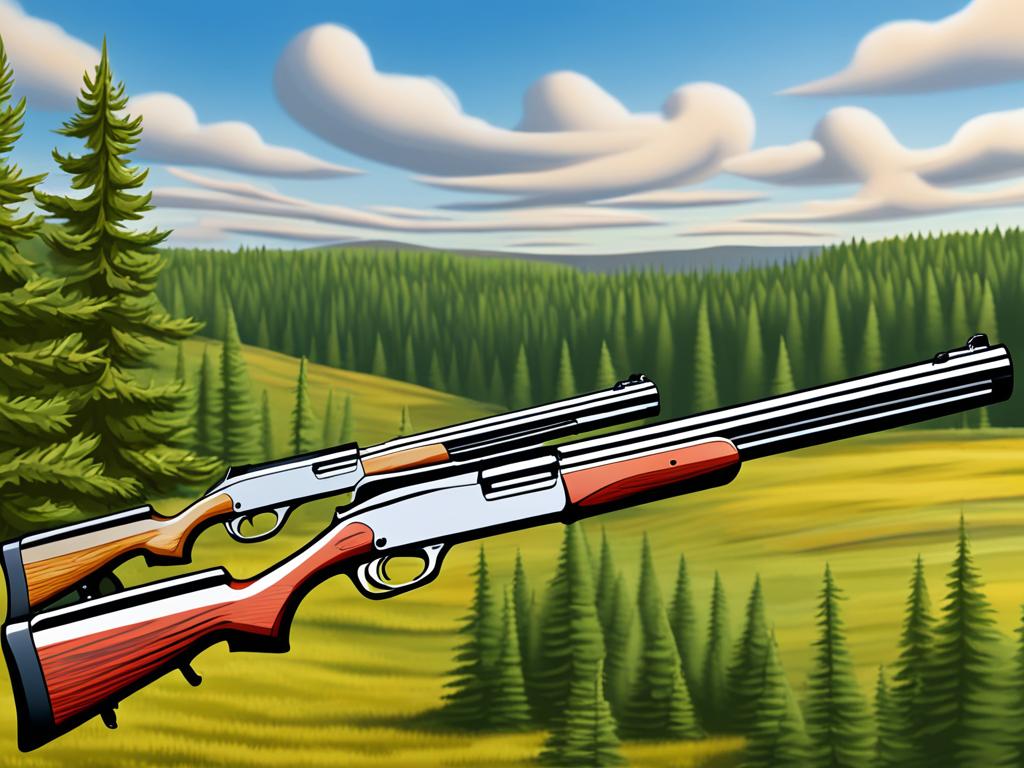
You know that in the shotgun family, the 28 gauge is like the nimble gymnast, less about brute force and more about elegance and precision. Loved for its sleek profile and a recoil that won’t knock your shoulder to last Sunday, the 28 gauge is like an extension of your will when it comes to skeet shooting or sending a well-placed shot towards a winged upland bird. Its charm isn’t just in its handling, though. Some say its pattern density is second to none, giving you that perfect balance between challenge and performance.
And don’t let its size fool you. The 28 gauge packs enough punch to dispatch small game efficiently, making your hunting excursion both ethical and satisfying. Plus, it’s the shotgun that might just save your grace when you’re wading through the brush, thanks to its lightweight build.
Understanding the Limited Use of the .410 Bore
Now, let’s talk about the .410 shotgun, the specialty piece of the firearms world. This little marvel is the quintessence of specialization. Think of it as the fine-point pen of the shooting sports—best for when accuracy is paramount and a delicate touch is required. Its diminutive stature conceals its real power—for the expert, it’s a deadly effective tool for small game hunting. For the novice, it’s the gentle introduction to the world of shooting sports.
Yes, its uses may be limited when compared to the versatility of a 12 or 20 gauge, but that’s hardly the point. In the hands of a skilled shooter, the .410 can perform ballistic ballet—hitting agile targets with aplomb, turning a moment of tension into an exhibition of skill and control. Remember, while it’s not for everyone, those who know, know why the .410 bore is something special.
So, whether it’s the svelte 28 gauge or the discerning .410 bore, these specialized shotguns carve their own niche in a field often dominated by the broader strokes of larger gauges. If you’re seeking a shotgun experience that’s a step off the beaten path, perhaps one of these fine instruments will be your next great adventure in skeet shooting or small game hunting.
Shotgun Gauges: The Compelling Case for the Smaller Bore
When you’re contemplating shotgun gauge advantages, consider the pull of smaller bores. These nimble small bore shotguns are making a splash among enthusiasts for their shooter-friendly traits, notably where it counts: shooter comfort. But don’t just take our word for it; let’s crack open the case and peer into the fine points that make these shotguns the darlings of marksmen everywhere.

Imagine you’re on a hunt, the skies painted with the scattering flush of upland birds. A lighter shotgun means swifter aiming, less fatigue, and a joy in every step across the fields. But beyond the weight and handling, it’s the reduced recoil of these smaller gauges that truly charm. Whether you’re a seasoned hunter or a bright-eyed novice, the kinder kick of a 20 or 28 gauge ensures a shooting session as comforting as a well-worn pair of boots.
With recoil comes the rub, as the saying goes. But with small bore shotguns, that ‘rub’ becomes nothing more than a gentle nudge, a small reminder of the power you wield with every deliberate pull of the trigger.
Let’s not forget the advantage of precision. A smaller bore generally equates to a tighter shot pattern, which translates into a boon for those skillful shots aiming for game in closer quarters. It’s here, in the crisp air of the upland hunt, where the smaller bore shotguns shine with centric grace.
| Gauge | Recoil | Weight | Ideal Use |
|---|---|---|---|
| 20 Gauge | Low | Light | Upland Bird Hunting |
| 28 Gauge | Very Low | Very Light | Target Shooting, Skilled Upland Hunting |
- 20 Gauge: Heralded for its happy medium between payload and recoil
- 28 Gauge: The virtuoso’s choice—nimble, precise, and a joy to shoot
So when you next find yourself pondering which shotgun to cradle in your arms, remember: the power of the shotgun isn’t just measured in recoil and noise. It’s also in the control, the ease, and the grace of a day spent in nature with a trusted companion nestled in your palms—one that promises you comfort and joy in every shot.
Savvy Shot Selection: Understanding Shotgun Ammo Terminology
Step into the world of shotgun perfection, where the right ammo doesn’t just complement your shotgun—it’s an extension of it. You’re about to navigate the specifics of shotgun ammunition types, where one shell doesn’t fit all. Like a carefully chosen wardrobe, your ammo selection can dress you for success or leave you underdressed for the occasion.
A Primer on Shot: Size, Composition, and Capacity
As you ponder over shotgun shell specifications, consider the shot itself. Pellets are not universally sized; rather, they run the gamut from fine sand-like grains to formidable balls capable of downing the burliest turkey. Shot pellet size affects pattern density, penetration, and ultimately, the knockdown power of your payload. The following table simplifies the complex world of shot size:
| Shot Size | Typical Use | Game Targets |
|---|---|---|
| #7 1/2 | Small Game | Pheasant, Rabbit |
| #5 | Medium Game | Turkey, Duck |
| #BB | Large Game | Geese, Deer (slugs) |
But there’s more than size to consider. Lead has long been deposed from its throne, giving way to steel, bismuth, and tungsten—the non-toxic nobility. These alternative materials cater to environment-savvy hunters acutely aware of their ecological footprint.
Feeling the Impact: How Gauge Influences Recoil and Control
The subject of gauge is not merely academic—it’s a physical affair. Where larger shotgun ammunition types offer abundant shot, they also invite the unwelcome guest of recoil effects. And recoil is more than a mere jerk against your shoulder; it’s a factor that can rattle your aim and ruffle your shooting rhythm.
Understanding the interplay between gauge and recoil equips you with the foresight to anticipate the gun’s behavior with every trigger pull. It’s about finesse, not just firepower.
So, whether you’re thundering away with a 12 gauge or tip-toeing through the brush with a .410, cherish this wisdom: your shooting triumphs are forged long before you step into the wild—it begins at the ammo store.
Conclusion
By now, you’ve likely realized that shotgun gauge selection isn’t just about picking up any firearm off the shelf. It’s about delving into the depths of shotgun bore sizes, scale, and shot characteristics to make an informed firearm purchase that suits your needs to a T. Whether it’s skeet shooting or hunting that piques your interest, the right gauge builds the bridge between your aspirations and reality. The versatile 12-gauge is often the frontrunner but don’t discount the niche .410 bore’s charm for specific scenarios.
And it’s not just about knowing your weapon. The ammo itself dictates the outcome of every pull of the trigger. Grasping the essentials of shotgun ammo terminology empowers you to select the perfect ammunition, ensuring your outings in the world of shotgun shooting sports reach their zenith. Power and recoil management? They’re not just figures of speech; understand them, and you become the master of your shooting destiny.
Ultimately, knowledge is power. Recognizing the subtleties of each shotgun gauge and its corresponding ammunition typifies an adept marksman. Whether you’re patterning shots on the range or tracking a pheasant in the field, your skill, enhanced by understanding, is what turns an ordinary day into a story worth recounting. Gear up, step out, and own every shot—your tailored shooting adventure awaits.
FAQ
What does “shotgun gauge” actually mean?
Think of shotgun gauge as the James Bond of bore sizes—mysterious yet essential. It refers to the diameter of the shotgun’s barrel and is determined by the old-school method of counting how many lead balls of the barrel’s diameter it takes to weigh a pound. In practice, smaller gauge numbers mean you’re dealing with bigger bores; a 12-gauge means serious business compared to a .410 bore.
Is a 12-gauge more powerful than a 20-gauge shotgun?
Absolutely! Think of the 12-gauge like a heavyweight boxer and the 20-gauge as a nimble featherweight. The 12-gauge packs a harder punch with more shot and power, ideal for taking down that buck or home defense. Meanwhile, the 20-gauge is your quick-footed friend with less recoil, great for upland bird hunting without the shoulder-shocker.
How do I choose the right shotgun gauge for hunting?
Picking the right shotgun gauge is like choosing the right partner for a dance—it’s got to match your style and needs. The 12 and 20 gauges are like the prom king and queen; they’re popular for a reason, balancing power and manageability. Think about what you’re hunting, try different gauges on for size, and chat up some sage shooters to find your best match.
Can a beginner handle a 12-gauge shotgun?
Sure, if you consider a mechanical bull a beginner’s ride! A 12-gauge is manageable but packs substantial recoil. Newbies might prefer to woo a gentler gauge like the 20 or the .410 before stepping up to the more robust 12-gauge. It’s all about easing into it and developing your prowess with less punishing kickback.
What makes the 10-gauge shotgun special compared to the 12-gauge?
Think of the 10-gauge as the burly lumberjack to the 12-gauge’s skilled carpenter. It’s all about raw power and range for long-distance love affairs with waterfowl and turkey. Less common, but when you need that extra oomph and precision, the 10-gauge is your go-to for bringing home the big birds.
Why would someone choose a 16-gauge over more common gauges?
The 16-gauge is the quirky cousin in the gauge family. It straddles the line between the powerhouse 12-gauge and the more genteel 20-gauge. For those looking for a balance of lightness and capability, particularly in the upland hunting scene, it’s a trusty choice with a character all its own.
What are the advantages of shooting with a 28-gauge shotgun?
Shooting with a 28-gauge is like driving a refined sports car. It’s sleek, nimble, and kind on the recoil. For marksmen after agility and a touch of elegance in the field or on the skeet range, this svelte option offers a challenge with rewarding precision.
Is a .410 bore shotgun good for anything besides teaching beginners?
You’d be surprised! The .410 bore may be the training wheels of the shotgun world, but in skilled hands, it’s like a scalpel—precise and effective at close range. It’s no crowd-pleaser at big-game gatherings, but it’s a hit in the realm of small game and a top choice for introducing the craft to novices.
What’s the deal with shotgun shell length, shot weight, and pellet size?
Entering the world of shotgun shell specs is like ordering at a gourmet taco truck—there are a variety of fillings and sizes. Shell length can range from the snack-sized 2 3/4-inch to the fully-loaded 3-inch magnum; shot weight and pellet size govern how much punch it packs and the pattern it serves up. They all come together to create a burst of flavor that either spices things up or cools down the kick.
Does the gauge of a shotgun influence its recoil and shooter control?
Oh, you betcha! Larger gauges with more shot have a kick like a mule, making them a wild ride for anyone not ready to wrestle that Bronco. Smaller gauges offer a smoother saunter with less recoil, which means you can stay on target easier without feeling like you’ve been in a wrestling match. It’s all about how much buck you can handle, partner!