

Curious about what your goats should be eating? Contrary to popular belief, goats are far from being garbage disposals. These furry friends are quite choosy when it comes to their diets. In this article, we’ll explore the fascinating world of goat nutrition and uncover what really gets those goat taste buds tingling.
Key Takeaways:
- Goats have a varied diet that includes hay, grasses, weeds, grain, and even tree bark.
- The main part of a goat’s diet is roughage, which provides fiber and keeps them feeling satisfied.
- Goats require vitamins, minerals, and salt in their diet to maintain good overall health.
- Grain should be given in moderation to prevent obesity in goats.
- Browse, such as leaves and bark, allows goats to practice their natural foraging behavior.
The Importance of Roughage in a Goat’s Diet
When it comes to a goat’s diet, roughage takes the center stage. Roughage, which typically consists of grass or hay, plays a crucial role in supporting the digestion and overall health of goats. This section explores why roughage is essential for goat nutrition and how it contributes to their well-being.
Goats are designed to thrive on a diet rich in roughage due to its unique properties. Unlike high-calorie foods, roughage provides goats with a low-calorie option that is packed with fiber. This fiber is vital for maintaining a healthy digestive system and preventing issues like constipation.
“A goat’s digestive system is a marvel in itself. Let’s take a closer look at what happens once roughage enters their stomach.”
The digestive journey begins in the rumen, which is the first chamber of a goat’s stomach. The rumen houses a diverse population of beneficial bacteria that work diligently to break down the roughage. This process involves transforming hay and grass into easily digestible fats that the goat’s body can utilize for energy. In addition to the rumen, goats possess three other stomach chambers that aid nutrient absorption.
To maintain optimal digestive health, it’s important to provide goats with a consistent supply of hay or grass throughout the day. This ensures that their rumen remains active and the beneficial bacteria can thrive, promoting efficient digestion and nutrient absorption.
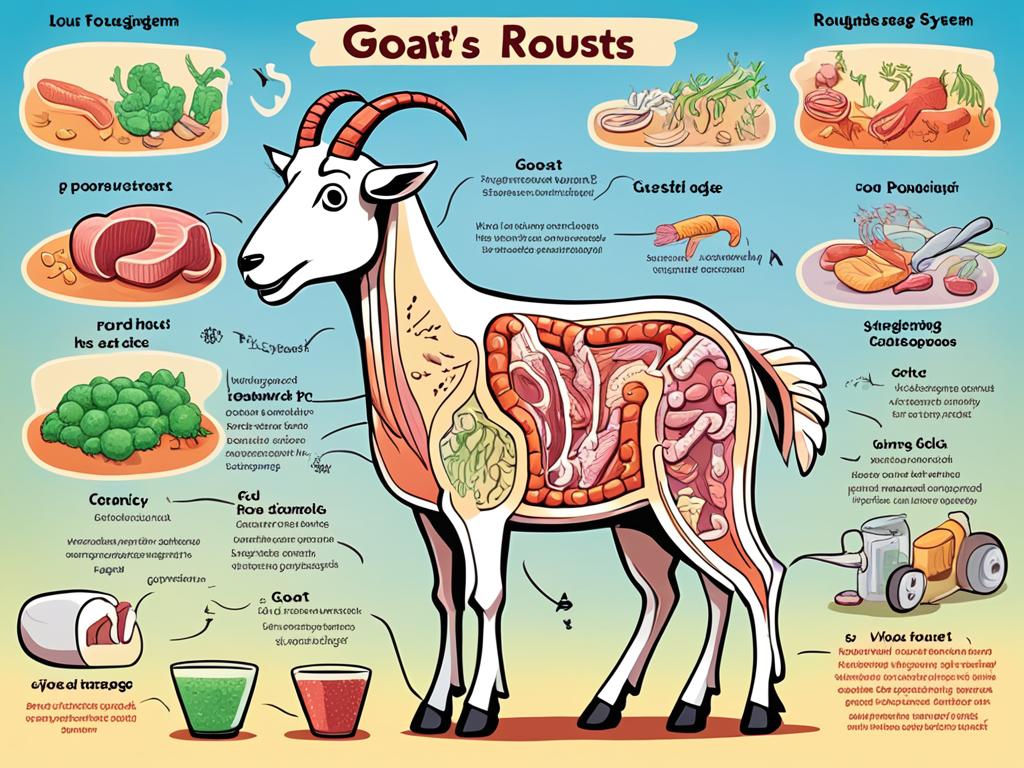
To summarize, roughage is the foundation of a goat’s diet, fueling their digestion and supporting overall health. Let’s now delve into the role of vitamins and minerals in a goat’s diet, which further enhance their well-being and vitality.
The Role of Vitamins and Minerals in a Goat’s Diet
Just like people, goats need small amounts of vitamins and minerals to keep their bodies functioning well. They also require salt in their diet. Providing goats with a powdered mineral mixture made especially for them helps ensure they get the right balance of nutrients. Additionally, goats (and most other mammals) need small amounts of salt in their diet, which can be provided through salt blocks. By including the necessary vitamins, minerals, and salt in their diet, goats can maintain good overall health.
Goat Nutrition Essentials
- Vitamins
- Minerals
- Salt
Goats, like all animals, need essential vitamins and minerals to support their bodily functions. These nutrients play a vital role in their growth, reproduction, and overall well-being. While goats obtain some vitamins and minerals through their forage and feed, it is important to supplement their diet to ensure they receive adequate amounts.
A powdered mineral mixture tailored specifically for goats can help meet their nutritional needs. This mixture is formulated with the right balance of vitamins and minerals for optimal goat health. It can be easily added to their feed or provided separately.
In addition to vitamins and minerals, goats also need salt in their diet. Salt blocks are commonly used to provide goats with this essential nutrient. Salt not only provides flavor but also helps regulate fluid balance, muscle function, and nerve impulses in goats.
Proper goat nutrition includes ensuring that they receive the necessary vitamins, minerals, and salt to thrive. By providing a powdered mineral mixture and salt blocks, you can help support your goats’ overall health and well-being.
| Vitamins | Benefits |
|---|---|
| Vitamin A | Essential for vision, immune function, and reproductive health |
| Vitamin D | Aids in calcium absorption and bone health |
| Vitamin E | Acts as an antioxidant, protecting cells from damage |
| Vitamin B12 | Supports red blood cell production and nerve function |
In addition to vitamins, goats require a range of minerals to maintain their health. These minerals include:
- Calcium: Vital for strong bones and teeth
- Phosphorus: Essential for energy metabolism and cell function
- Magnesium: Supports nerve and muscle function
- Potassium: Regulates fluid balance and muscle contractions
- Copper: Necessary for iron absorption and red blood cell production
- Zinc: Important for immune function and wound healing
By including these essential vitamins and minerals in their diet, you can ensure that your goats have the nutrients they need for optimal health and performance.
The Role of Grain in a Goat’s Diet
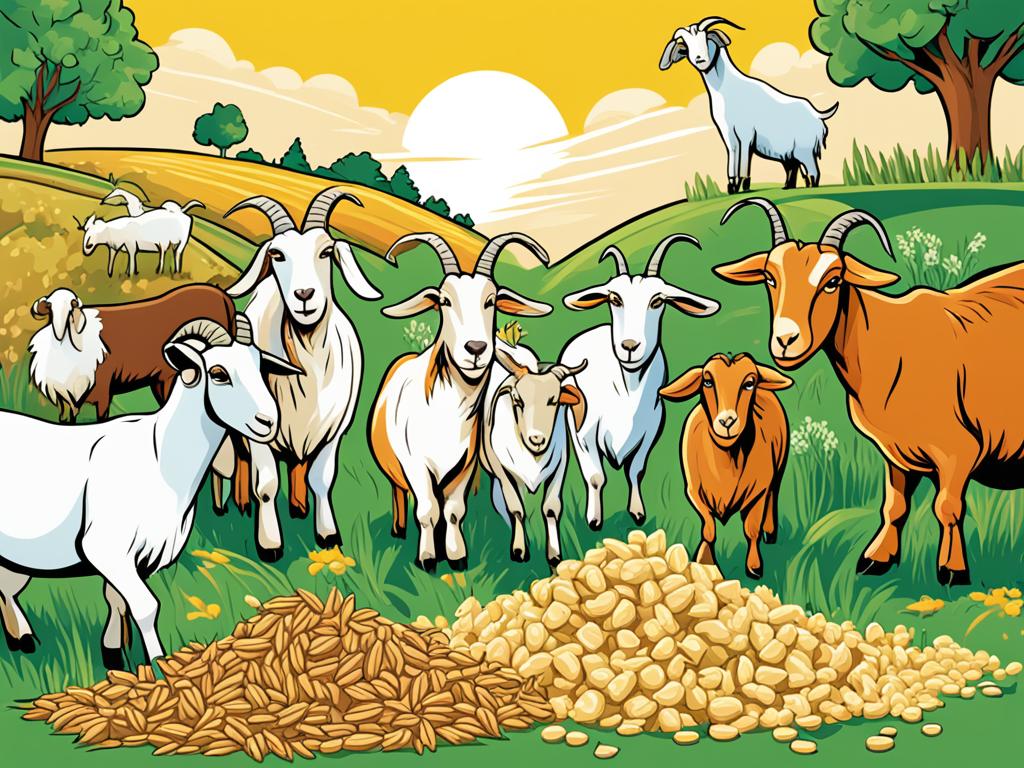
Grain is like candy for goats, something they absolutely love and devour with gusto! But just like you wouldn’t eat candy for every meal, goats shouldn’t have an all-grain diet either. It’s important to understand the role of grain in a goat’s diet and feed it in moderation.
Goat grain is typically a mix of corn, barley, oats, and soybeans, packed with calories that provide goats with energy. So if you want to spoil your goats or help them gain weight, grain can be a tasty treat. However, keep in mind that grain is low in fiber, which is essential for a healthy digestive system. Too much grain can lead to obesity in goats, just like eating too many sweets can lead to weight gain in humans.
To strike a balance, it’s crucial to provide goats with a varied diet that includes a combination of roughage, vitamins, minerals, and grain. This ensures they get the essential nutrients they need without overindulging in high-calorie grain. Remember, your goats are picky eaters who know what’s best for them!
“All work and no grain makes a grumpy goat!” – Anonymous
The Pros and Cons of Feeding Goats Grain
Let’s take a closer look at the advantages and drawbacks of including grain in a goat’s diet:
| Pros | Cons |
|---|---|
| High in calories, providing energy | Low in fiber, leading to potential obesity |
| Delicious treat that goats find irresistible | Can cause digestive issues if fed in excess |
| Helps goats gain weight when needed | Can lead to nutrient imbalances if relied upon too heavily |
As you can see, feeding goats grain has its benefits and drawbacks. It’s all about finding the right balance that meets their nutritional needs while maintaining a healthy weight. A little grain can go a long way to keep your goats happy and satisfied.
Remember, goats are like friends who adore surprises. So treat them to some grain occasionally, but ensure it remains a special indulgence in their overall diverse and nutritious menu. Let them enjoy their hay, grass, and browse while savoring the occasional grainy delight!
The Benefits of Browse for Goats
Goats have a natural affinity for browsing on leaves and bark, and incorporating this behavior into their diet offers numerous benefits. Providing goats with sticks and branches that still have leaves attached, known as browse, allows them to engage in their innate foraging behavior while reaping the nutritional rewards. When given browse, goats eagerly strip the leaves and bark off the branches, which not only keeps them mentally stimulated but also provides them with additional nutrients.
Letting goats indulge in browse aligns with their natural instinct to forage and keeps them physically and mentally engaged. This practice satisfies their desire to munch on twigs while supplementing their diet with essential vitamins, minerals, and fiber found in leaves and bark.
The Importance of Foraging Behavior
Browse encourages goats to exhibit their natural foraging behavior, which is vital for their overall well-being. Foraging allows goats to exercise their jaw muscles, providing them with mental stimulation and preventing boredom. By presenting goats with browse, you offer a diverse and dynamic dining experience that simulates their natural habitat, contributing to their overall happiness and satisfaction.
Moreover, providing browse offers environmental benefits. It allows goats to efficiently utilize plant resources that might have otherwise gone to waste. By incorporating browse into their diets, goats contribute to ecosystem balance by participating in a natural process of recycling plant material.
Browse Selection and Precautions
When selecting browse for your goats, it is crucial to consider their safety and nutritional needs. Ensure that the plants and trees you provide are non-toxic to goats. Familiarize yourself with the local flora and consult the expertise of a horticultural specialist or veterinarian to identify suitable browse options for your goats.
Table: Examples of Safe and Nutritious Browse for Goats
| Plant/Tree | Nutritional Benefits | Precautions |
|---|---|---|
| Willow | Rich in minerals and anti-inflammatory properties | Avoid wilted or fallen branches, as they may harbor harmful toxins |
| Apple | High in fiber and vitamin C | Remove any seeds or toxic parts before providing |
| Hawthorn | Supports cardiovascular health and provides antioxidants | Avoid thorny varieties and only provide edible parts |
Remember to introduce browse gradually and monitor your goats’ consumption. While goats enjoy browsing, it should not replace their primary diet of hay, roughage, and other essential nutrients. Offering browse as a supplemental treat ensures a well-rounded diet that caters to their goat nutrition needs and natural foraging behavior.
Feeding Goats Christmas Trees
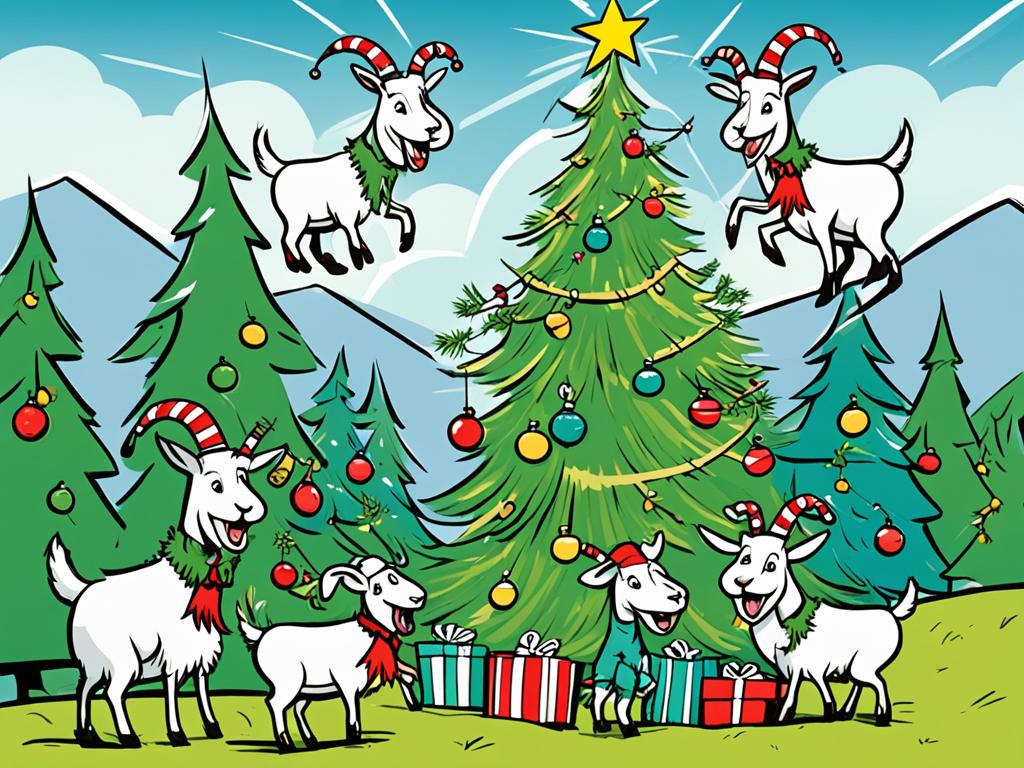
Who knew that goats would find Christmas trees to be such a tasty treat? Well, some innovative farmers have discovered this surprising fact! It turns out that Christmas trees and pine trees can actually provide added nutrients to a goat’s diet. So, if you’re wondering what to do with your old Christmas tree after the holiday season, why not consider feeding it to some hungry goats? It’s a win-win situation!
But hold on, before you start loading up your goat’s menu with pine needles and ornaments, there are a few things to keep in mind. While Christmas trees can be a rich additive to a goat’s diet, they should still be supplemented with hay. Hay provides the necessary fiber that goats need to maintain a healthy digestive system. So, consider the Christmas tree as a delicious side dish, rather than the main course!
Feeding goats Christmas trees not only adds variety to their diet but also helps communities dispose of their trees in an eco-friendly manner. Instead of ending up in a landfill, the trees can be put to good use as a tasty snack for our bleating buddies. It’s a fun and sustainable way to recycle your Christmas tree!
| Benefits of Feeding Goats Christmas Trees | Proper Implementation |
|---|---|
|
|
So, the next time you’re enjoying the holiday season, remember that goats are more than happy to help with the aftermath. Give them a treat by feeding them your old Christmas tree, and they’ll thank you with wagging tails and satisfied smiles!
Goat Behaviors: The Flehmen Response
When it comes to goat behaviors, one that stands out is the intriguing Flehmen Response. Picture this: a goat curls its upper lip, stretches its neck, and takes a deep sniff of the air with its lips. What’s going on? This response is triggered when goats catch a whiff of something interesting or want to investigate further. It’s their way of saying, “Hmm, there’s something captivating here, let me take a closer look!”
So, what’s happening inside their adorable goat heads? Goats have a special olfactory sensory organ called the Jacobson’s organ, located on the roof of their mouths. This remarkable organ allows them to detect pheromones and gather valuable information about various smells. It’s like having a superpower that helps goats understand and communicate with their environment through scent.
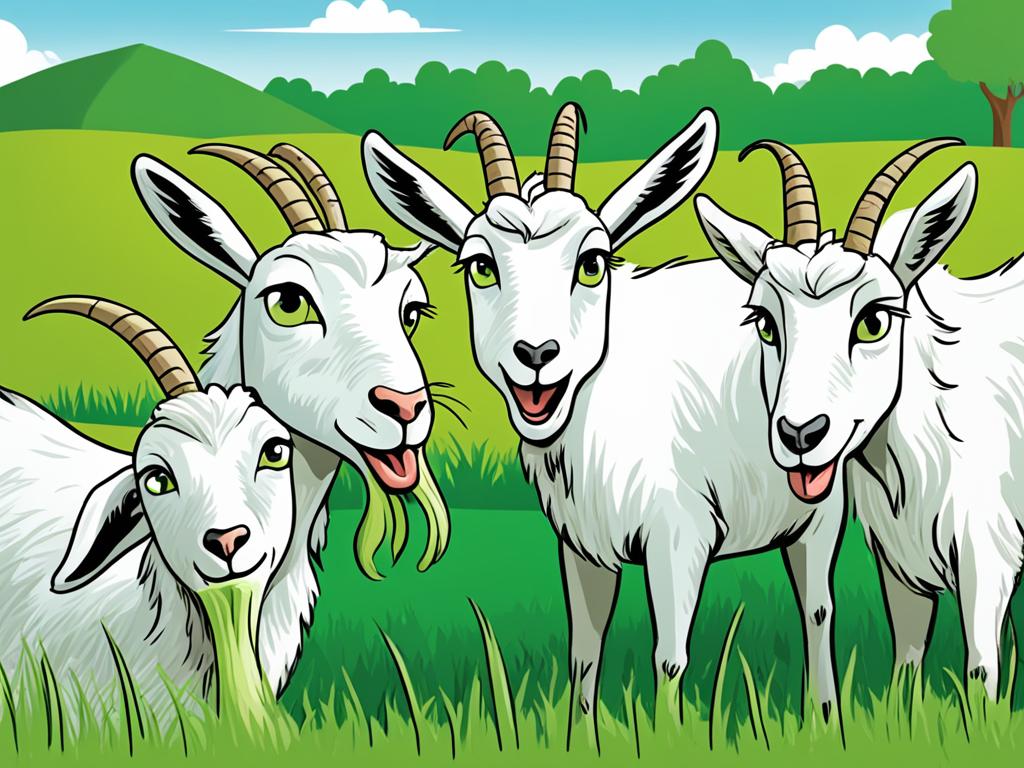
The Flehmen Response is a unique behavior that showcases the goats’ incredible olfactory sensory organ and their remarkable curiosity. It’s an important tool in their behavioral repertoire, helping them make sense of the world around them.
“The Flehmen Response is truly a sight to behold. It’s like watching goats become super-sleuths, using their sense of smell to uncover hidden mysteries. They have quite the nose for adventure!”
So, the next time you see a goat perform the Flehmen Response, remember that they’re not just sniffing around aimlessly. They’re tapping into their olfactory superpowers and embarking on a sensory adventure like no other.
Other Interesting Goat Behaviors
It’s no secret that goats are clever creatures, showcasing their intelligence through various behaviors. These remarkable animals possess impressive learning abilities and a sharp memory. They can be easily trained to perform tricks and respond to commands, becoming highly motivated by the prospect of delicious food rewards.
“Goats are not just agile climbers; they’re also quick learners with an exceptional memory!”
Researchers have conducted studies that reveal goats’ cognitive capabilities. In fact, these resourceful animals have been known to solve intricate puzzles originally designed for primates. What’s even more astonishing is their ability to remember the solution to these puzzles, even after a significant amount of time has elapsed.
But it’s not just complex problem-solving that goats excel at; they can also learn simple commands and recognize their names. Goat owners have found success in teaching their goats basic instructions such as “get up” or “come.” These behaviors demonstrate the high level of intelligence and adaptability possessed by these charming creatures.
Did you know? Goats possess a phenomenal memory that extends beyond commands and tricks. They have an uncanny ability to recall familiar faces, including those of humans and other animals they regularly interact with. This exceptional memory helps goats establish strong bonds with their human caretakers and fellow herd members.
Goats’ intelligence, learning abilities, and memory all contribute to their social dynamics within a herd. They can quickly recognize familiar goats and form long-lasting bonds. Additionally, goats utilize their memory to navigate their surroundings efficiently, ensuring their survival in diverse environments.
Now that you have a glimpse into the incredible behavioral repertoire of goats, let’s dive deeper into their captivating world.
Conclusion
Congratulations on learning about the ins and outs of goat nutrition and feeding! Understanding what goats eat is key to keeping them healthy, happy, and satisfied.
As you probably know by now, goats thrive on roughage like hay and grass, which provides them with essential fiber. This roughage forms the basis of their diet, keeping their digestive system in tip-top shape. But don’t forget to sprinkle in some vitamins, minerals, and salt to keep their overall well-being in check!
While goats may have a sweet tooth for treats like grain and browse, it’s crucial to feed them in moderation. Too much of a good thing (looking at you, delicious grain) can lead to unwanted weight gain and potential health issues. Striking a balance between their main diet and occasional indulgences ensures that these bleating buddies stay in their best shape.
So, whether you have a single goat or a whole herd, remember to cater to their dietary needs while keeping a watchful eye on portion sizes. By providing a balanced, nutritious diet, you’ll be providing the best care for your beloved goats and ensuring their well-being for years to come. Happy feeding!
FAQ
What do goats eat?
Goats primarily eat roughage such as hay and grass. They also enjoy sampling a variety of foods including weeds, grain, and even tree bark.
Why is roughage important in a goat’s diet?
Roughage, such as grass or hay, is the main part of a goat’s diet. It is low in calories and high in fiber, helping to maintain a healthy digestive system.
What role do vitamins and minerals play in a goat’s diet?
Goats need small amounts of vitamins and minerals to keep their bodies functioning well. Providing them with a powdered mineral mixture helps ensure they get the right balance of nutrients.
What is the role of grain in a goat’s diet?
Grain is a favorite treat for goats and provides lots of energy. However, it is low in fiber, so it should be fed in moderation to prevent obesity.
Why is browse beneficial for goats?
Providing goats with browse, such as sticks and branches with leaves, allows them to engage in their natural foraging behavior and keeps them mentally stimulated.
Can goats eat Christmas trees?
Yes, goats can munch on Christmas trees as a rich additive to their diet. However, they still need hay as their primary source of food.
What is the Flehmen Response?
The Flehmen Response is a behavior exhibited by goats when they curl their upper lip and sniff the air. It helps them gather information about smells using their olfactory sensory organ.
Do goats have interesting behaviors?
Yes, goats are intelligent animals with remarkable learning abilities and memory. They can be taught tricks, solve puzzles, and even learn their names and basic commands.
What should I know about feeding goats?
Understanding what goats eat is essential for their health and happiness. This includes providing roughage, supplements, and treats in moderation to create a balanced diet.