
Hey there, intrepid gastronome! Have you ever pondered the culinary possibilities that lie in the world of edible bear meat? As bear hunting gains traction across the United States, with locales from Missouri to New Jersey drawing hunters into the fold, an ancient tradition is finding new fans. Yes, you can indeed transform your prize from the wilderness into a succulent, savory feast that far exceeds the typical bear meat cuisine you might hear whispered about around the campfire.
But before you start dreaming of bear bacon and bear burgers, let’s debone some of the basics, shall we? Join us as we carve through the bear essentials and explore the flavor frontier of one of nature’s most underestimated delicacies. Prepare your taste buds for a journey into the wild side of the kitchen, where bear meat might just become the new highlight of your hunting season.
Unveiling the Edibility of Bear Meat
Are you curious about the rustic charm and rich flavors of bear meat consumption? It’s time to expand your palate and delve into the gastronomic world where the game meat edibility reigns supreme. Bear meat isn’t merely a survivor’s fare; it’s a sought-after ingredient that, when treated with respect, transforms into a delectable bear hunting culinary experience.
When processed with the diligence it deserves, bear meat offers an authentic taste of the wilderness. Imagine savoring a mouthful of history, a protein that has sustained humans for centuries. Embrace your inner epicurean! The seasons are generous with their bounty; spring bears pamper their palates predominantly on fresh vegetation resulting in lean meat that boasts subtle, yet invigorating flavors. Meanwhile, autumn bears gorge on berries and acorns, endowing their meat and fat with nuanced richness – perfect for that hearty stew or roast you’ve been dreaming about.
But let’s talk specifics—what does the bear’s diet mean for its meat? Here’s a tasteful Comparison of Flavors Based on Seasonal Diets:
| Season | Typical Diet | Flavor Notes | Culinary Uses |
|---|---|---|---|
| Spring | Fresh greens, shoots | Lean, mild | Sautéing, grilling |
| Fall | Berries, nuts, crops | Rich, fatty | Stews, slow-cooked dishes |
As you can see, bear meat is not just incredibly versatile but also a manifestation of the environment it roamed. Before you plan your next culinary adventure, remember that the vitality of the flavor lies in the organic and unspoiled diet of this majestic game. Respect the bear, explore its habitat through your taste buds, and be mindful of the practices that ensure the safety and piquancy of your dish.
Now, don’t let unfamiliarity intimidate you. Prepare to embark on a journey that will lead to sumptuous feasts and stories worth telling. After all, dining on bear meat is an homage to nature’s provision and the ancestral spirit of hunting – a true testament to the sustainable cycle of life and the richness it offers our tables.
Can You Eat Bear Meat?
Hey there, adventurous eater! Ready to explore the wild side of cuisine with some hearty hunter’s game? If you’re nodding with intrigue, then strap into your culinary seatbelt, because we’re diving into the delectable world of Alaskan delicacies, including the esteemed grizzly bear meat and black bear culinary traditions.
Bear Meat: A Hunter’s Delicacy
Consider yourself part of an exclusive club when you get a taste of bear meat. This isn’t your everyday steak or chicken breast; it’s the stuff of rugged wilderness and tales by the campfire. Black bear, especially those ambling through the Alaskan wild feasting on plump, wild berries, is a source of fascination and delight for the daring gourmand. Such black bear morsels are not just sustenance, they’re a celebration of the hunt, a toast to the wilderness. Now, imagine the robustness of braving the elements and outsmarting a grizzly. That’s not just dinner, my friend, it’s a story.

Understanding Bear Meat Legality
Before you set out traps or sharpen your hunter’s knife, let’s talk legality. You can indeed possess and consume bear meat—thanks to Uncle Sam—but selling your spoils? That’s a big no-no. Keep your transactions at the hunting stories and memories level, and make sure your acquisitions are all above board. Remember, with great bear meat comes great responsibility.
Dispelling Myths Around Bear Meat Consumption
Entertain this for a moment: your pal at the lodge tells you bear meat is off-limits. Too dangerous, they say. But let’s cut through the myths like a hot knife through cold butter. Bear meat, my fellow epicureans, is a treasure trove of flavors – if, and that’s a big if, you cook it with the precision of a master chef to wipe out uninvited guests like trichinella. Get it right, and you’ve got a plate of safe, savory delight. Get it wrong, and well, let’s not venture there. So get your cooking game on point, and revel in the rich tastes that our four-legged, furry forest dwellers provide.
| Bear Variety | Common Diet | Flavor Profile | Season Preferred |
|---|---|---|---|
| Black Bear | Berries, Insects, and Fish | Slightly Sweet, Rich | Spring/Fall |
| Grizzly Bear | A Diverse Menu including Plants, Animals, and Fish | Gamey, Can Vary Wildly | Fall |
There you have it, a glimpse into the world of bear meats – a true hunter’s delight. Whether you’re tracking through the Alaskan wilderness or stirring up a storm in your kitchen, bear meat is a gratifying conquest for your palate. Bon appétit!
The Pros and Cons of Bear Meat in Your Diet
When you sink your teeth into bear meat, you’re not just enjoying a meal; you’re partaking in a tradition as ancient as hunting itself. But let’s chew over the bear meat nutrition and how it stacks against your usual steak or chicken breast. Bear meat is often coined as a lean protein source, rich in nutrients and lower in saturated fat and calories than many domestic options on your plate. This may be because these furry giants graze on wild greens, devouring a diet untouched by the modern evils of pesticides and herbicides.
However, not every bite of bear can be as lean and clean. If Yogi Bear had a penchant for fish, the bear meat might have a stronger, perhaps less appealing taste. Not to mention that improper preparation can toss you into the ring with unwanted diseases like trichinosis. Yes, foodies and health buffs, bear meat takes a little effort to ensure you’re not gambling with your gastronomy.
Let’s size up the wild game health benefits with a comparison:
| Nutrient | Bear Meat | Domestic Meat |
|---|---|---|
| Calories | Lower | Higher |
| Saturated Fat | Lower | Higher |
| Lean Protein | Higher | Varies |
| Pesticides/Herbicides | Free of these | May contain residues |
Remember, you’re not just what you eat; you’re also what your dinner ate. It’s the circle of dining! So if you’re hunting for a diet that packs a punch in proteins but not in chemicals, bear meat could just be your wild card. But as with all things wild and free, handle with care, cook thoroughly, and savor responsibly.
Distinguishing the Flavors: What Bear Meat Tastes Like
If you’re exploring the wild world of game meats, bear might just barrel into your next culinary adventure with its unique and robust flavor profile. Bear meat is a delectably gamey treat that can be a sweet surprise or a savorier fare, depending largely on our furry friend’s diet and the time of year it’s taken.
Before we sink our teeth into the meaty details of bear cuisine, let’s cozy up to the distinct taste aspects that set bear apart from the more familiar steaks and chops that grace our tables.
Comparing Bear Meat to Other Game and Domestic Meats
Picture this: you’re dining on a steak that’s bolder than beef, with the sweetness you might find in a well-marbled pork chop. Yes, we’re still talking about bear meat. Compared to other game animals, bear meat boasts a gamey taste unique to creatures that roam the farthest reaches of our forests. It comes with texture and flavors reminiscent of venison, yet it layers on a character all its own. When you take a bite, you’re tasting the wild diet of berries and nuts—bringing a sweetness you won’t find in your everyday meats.
Spring vs. Fall Bear Meat: Seasonal Influences on Taste
Bear with me as we journey through the seasons. Take a bite of spring bear meat, and what do you get? A refreshing zest of greens and the mouth-watering taste of youth, thanks to the lean diet of a bear fresh out of hibernation. On the flip side, dig into fall bear meat, and you’re savoring the fuller, fat-drenched flavor that comes from a pre-winter feast. This seasonal dance of diet and flavor indicates that timing is everything when it comes to capturing the optimal bear meat flavor profile.
| Meat Type | Flavor Profile | Texture | Seasonal Variations |
|---|---|---|---|
| Bear Meat (Spring) | Sweet, subtle gaminess | Coarse-grained | Lean due to a diet of fresh vegetation |
| Bear Meat (Fall) | Richer, sweet from berries and nuts | More marbled | Fatty due to pre-hibernation feasting |
| Beef | Milder, less sweet | Fine-grained | Consistent year-round |
| Venison | Gamey, earthy | Leaner texture | Slightly varies – milder when grass-fed, stronger if corn-fed |
| Pork | Sweeter, not gamey | Softer, fine-grained | Depends on the part of pork and diet |
Whether you’re a seasoned hunter or a curious foodie, when it comes to wild game comparisons, bear meat certainly sits in a savory league of its own. With each chew, you’re unraveling a story—a tale of nature, diet, and the beauty of seasonal change.
The Nutritional Breakdown of Bear Meat
When you consider adding new kicks to your diet, bear meat brings more than just a novel taste – it’s a powerhouse of protein content, harboring surprisingly moderate fat levels. Hey, it might even surprise you with its cholesterol comparison and calorie intake perks against other meats. Nature’s protein shake, anyone? Let’s delve a bit deeper and see how this wild game stacks up, nutritionally speaking.
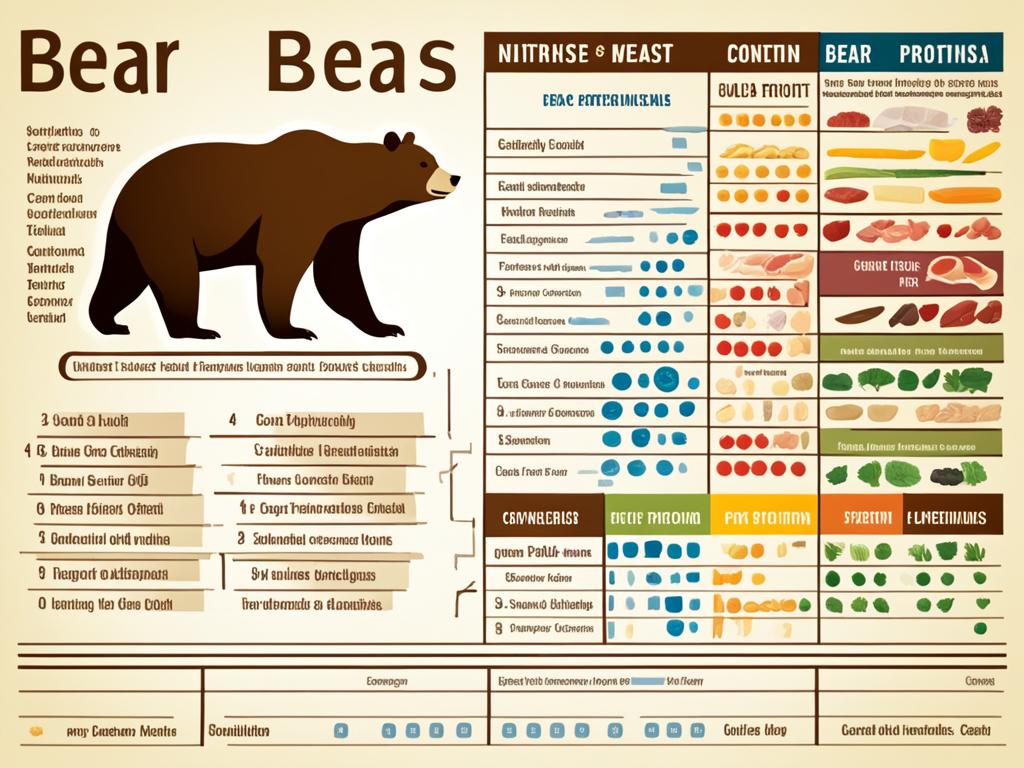
| Nutrient | Content per 100g | Benefits |
|---|---|---|
| Protein | 20.1g | Supports muscle repair and growth |
| Fat | 8.3g | Provides essential fatty acids |
| Cholesterol | Less than domestic meats* | Better for heart health |
| Calories | 163 Kcal | Ideal for energy without overindulging |
If you’re eyeing the wilderness for dinner options, black bear meat is particularly noteworthy for folks watching their weight or whomping their macros. With a generous 20.1% protein content – oh, hello, gains – and a moderate 8.3% fat level, you could dine on bear and maintain a lean physique. Plus, the calorie count? A neat 163 Kcal per 100 grams, making it a guilt-free indulgence on your plate.
Of course, like a choose-your-own-adventure novel, the exact nutritional composition of bear meat can vary. It depends on Yogi’s menu in the woods—berries? Fish? A slice of campers’ picnic? Those factors play a culinary symphony on the quality and taste you’ll savor.
Remember, your knife and fork are your tools for discovery—let the wild flavors of bear meat guide you to a new nutritional frontier. Just ensure your furry catch is from a sustainable source and cook thoroughly to a safe internal temperature. Bon Appétit, oh wild one!
*Comparative data on cholesterol levels relative to domestic meats were determined by the lower average cholesterol content in bear meat.
Preparing Bear Meat for the Gourmet Adventurer
Hey there, culinary daredevils! Embark on an epicurean journey into the wild with the untamed flavors of bear meat. But before your taste buds can romp through the flavorful wilderness, you must master the art of bear meat preparation. Ensuring safety and enhancing taste, proper cooking of this gourmet game dish demands your attention. So don those aprons, it’s time to channel your inner chef and venture into the realm of cooking techniques reserved for the gastronomically brave!
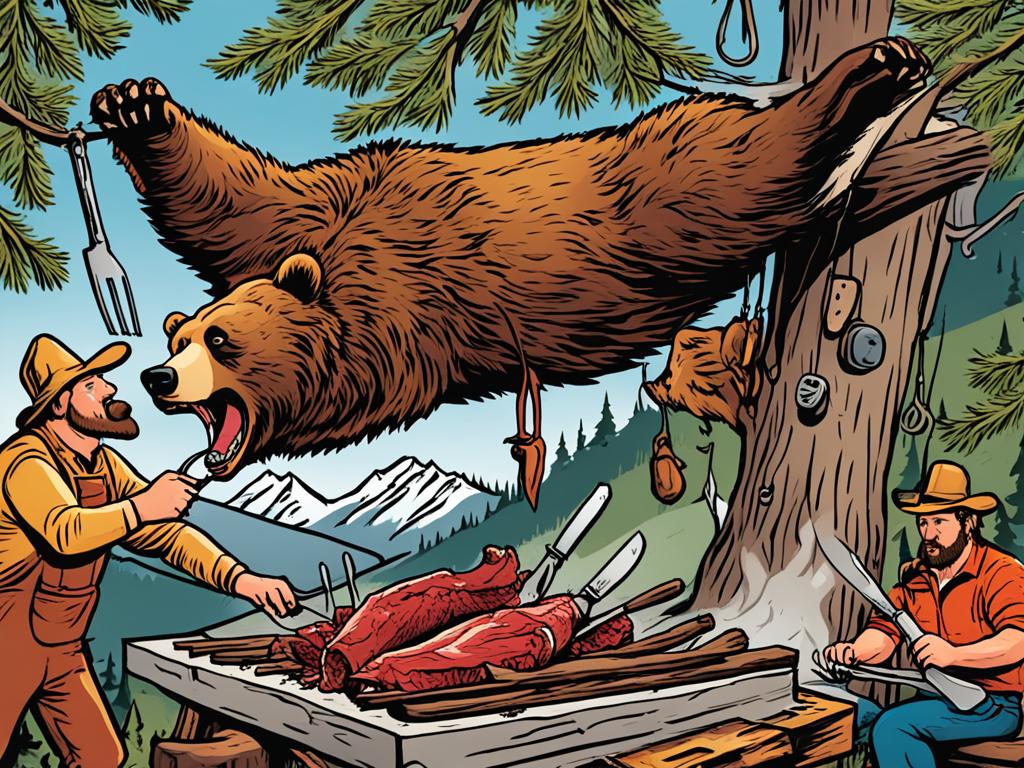
Basic Preparation Tips for Cooking Bear
First things first, to make that bear meat safe and scrumptious:
- Treat the meat like royalty and cook it to a regal internal temperature of 165℉—the magic number to send any parasites packing.
- Trimming is not just for haircuts. Get rid of excess fat to avoid any unwanted gamey undertones.
- Embrace an array of spices and herbs to elevate the bear meat to gourmet status; after all, every king deserves its crown.
Creative Recipes to Enhance Bear Meat Flavor
Insatiable for ideas to savor this wild delicacy? Try on these tempting preparations for size:
- Grilled bear steak marinated with rosemary and garlic–transform your backyard into a five-star wilderness retreat.
- Ground bear meat makes sausages that burst with a chorus of flavors, perfect for fancy brunch or backwoods camping.
- Slow-cooked bear roast with a blueberry glaze—a sophisticated twist, proving that bear blends beautifully with sweet and savory.
For the visual learners in the pack, let’s break down some complementary sides that’ll take your bear meat dishes from mere eats to a feast fit for the most discerning of wilderness epicures:
| Gourmet Bear Dish | Suggested Sides | Flavor Textures | Preparation Method |
|---|---|---|---|
| Bear Meat Sausages | Herbed Polenta | Rich and Creamy | Fry & Simmer |
| Roast Bear with Blueberry Glaze | Roasted Root Vegetables | Sweet and Earthy | Bake & Roast |
| Grilled Bear Steaks | Arugula Pear Salad | Crisp and Peppery | Grill & Toss |
And there you have it—a guide to transforming bear meat into gourmet game dishes worthy of your inner adventurer’s appetite. Bon appétit!
Understanding and Avoiding Trichinosis in Bear Meat
Did you know that indulging in succulent bear meat comes with a manual on food safety? Well, buckle up, because here’s where we get down to the nitty-gritty of keeping those pesky bear meat parasites at bay, ensuring that your wilderness cuisine doesn’t come with unwanted squatters.
The villain of our story is trichinella, a roundworm that parties hard in undercooked bear meat and wants to crash at your body’s pad. But, you’re not having any of that. By arming yourself with proper trichinella prevention knowledge, you’ll keep these parasites from turning you into their next rave location.
- Cook bear meat to an internal temperature of at least 160°F (71°C). Use a meat thermometer – simply eyeballing it won’t slice it!
- Practice a surgeon’s level of cleanliness when handling the raw meat. Imagine that every surface and utensil is a fresh, white coat that you’ve got to keep pristine.
- Sterilize all your gear post-bear butchering like you’re prepping for the next space launch. Cross-contamination is more than a faux pas; it’s a health hazard!
| Tips for Avoiding Trichinosis | Why It’s Important |
|---|---|
| Cook to 160°F/71°C | Parasites go poof! |
| Clean and sanitize | Keeps the environmental stage parasite-free |
| Sterilize equipment | Prevent living into a sequel of “Parasite Invasion” |
The encore to our parasite prevalence prevention comes in the form of vigilance. So, next time you’re planning to feast on the fruits of your hunting labor, remember: a dinner without trichinella is the real trophy!

Now, don’t let the fear of trichinella turn you off from your bear meat banquet. With these savvy safety steps, you’re all set for a culinary adventure that’s as secure as it is scrumptious. Bon Appétit!
Culinary Techniques for the Perfect Bear Feast
Ready to elevate your wild game culinary skills? Cooking bear meat might just put you at the top tier of backyard chefs. But getting that bear feast just right requires some insider knowledge. Whether you’re a seasoned pro at the smoker or just discovered the thrill of grilling, bear meat offers a unique opportunity to showcase your gourmet talents. Let’s dive into methods guaranteed to wow your palate and cement your status as a master of the grill.
From Grill to Smoker: Cooking Bear Meat Just Right
To achieve the pinnacle of grilling bear meat, you must pay close attention to temperature control—this isn’t the time for wild guesses. Watching the temp like a hawk ensures your bear masterpieces are succulent, safe, and sumptuously smoky. And speaking of smoky, smoking game meats, particularly bear, imparts a depth of flavor that’s unrivaled. It’s the kind of taste that sings of the great outdoors and makes your gourmet efforts the centerpiece of any gathering. Need a nudge in the right direction? Follow this guide:
- Preheat your grill or smoker to the ideal range—bear meat thrives around 225°F.
- Keep it low and slow to render that tough exterior into fork-tender morsels.
- Use fruit woods like apple, cherry, or hickory for a sweet, smoldering embrace that complements the richness of the meat.

Transforming Game into Gourmet: Unique Bear Meat Dishes
Take your bear sausages from mere cookout fare to gourmet bear dishes with a dash of creativity. From corned bear brisket to bear meatballs enrobed in artisanal sauces, the possibilities are as wild as the woods. Here’s your cheat sheet to transforming bear meat into a feast for the senses:
| Preparation | Recommended Cut | Cooking Temperature | Finishing Touch |
|---|---|---|---|
| Grilling | Backstraps, Ribs | Medium-High | A glaze of berry reduction |
| Smoking | Shoulder, Sausages | Low (225-250°F) | Spritz with apple cider vinegar |
| Corning | Brisket, Roasts | Low and Slow | Classic pickling spices |
| Sausage Making | Ground Bear Meat | Internal of 160°F | Natural casings for authenticity |
Stretch your culinary muscles by making those smoked bear sausages sing with homemade condiments. Or perhaps a bear roast, wrapped in a cloak of wild herbs, whispering hints of the wilderness in each bite. Remember, your only limit is your own daring-do. So fire up that grill, tend to your smoker, and let the gourmet adventure begin.
Responsibly Harvesting and Processing Bear for Consumption
What’s your take on ethical hunting? If you’re one to stand by sustainable practices, then knowing how to responsibly harvest and process bear meat is right up your alley. Game meat processing is not just about what happens after the kill; it’s a holistic approach ensuring sustainable harvesting and respect for wildlife, while still getting to savor the fruits of your labor – quite literally.
You wouldn’t want your hard-earned bear meat to be anything but top-notch, right? That’s where understanding the nuances of ethical harvesting comes into play. It involves not just a swift end to the hunt but also a prompt and sanitary approach to skinning and butchering. No shortcuts here – your diligence guarantees the quality and safety of the meat you bring to the table.
Now, you might be wondering about the specifics of game meat processing. The devil is in the details, and cleanliness is paramount. You’d want to cleanly butcher the meat in a way that would make your kitchen proud, all while ensuring it’s stored away from any potential contaminants.
- Quick, humane hunting methods
- Prompt skinning to preserve meat quality
- Clean butchering practices to avoid spoilage
- Proper storage to prevent contamination
Engaging in these practices isn’t just about being respectful to your four-legged quarry; it’s also about taking pride in the meat you provide for consumption. Ethical hunting practices lead to sustainable lifestyles and eating habits, which is a win for everyone involved – including the environment.
Next time you set out on a bear hunt, remember that you’re not just a hunter – you’re a conservationist, an ethical consumer, and perhaps most importantly, a chef in the making. The respect you show in the woods translates to the quality on your plate. So, make every step count, from tracking and taking down your game, to processing and enjoying the flavorful bounty you’ve worked so hard for. It’s all about the process, my friends – the ethical, sustainable, and undeniably tasty process.
How Bear Meat Stands Up Against Traditional Meats
So you’re curious how bear meat sizes up to the more familiar cuts from beef, buffalo, and poultry lining the supermarket shelves? Well, it turns out that this wild game contender may just tip the scales in favor of the adventurous eater. Boasting a leaner protein profile with a lower fat content, bear meat is carving out its niche among health-conscious carnivores and gourmet hunters alike.
Nutrient Comparison: Bear vs. Beef and Other Meats
Let’s chew over the facts: when compared to the likes of beef and buffalo, bear meat is not just another alternative protein—it’s a veritable nutritional powerhouse. With its significantly lower fat content and impressive lean muscle, it can rival chicken breast for the title of ‘healthy choice’. Whether you’re grilling, smoking, or braising, swapping in bear can add a wild twist to your nutritional intake, making it a competitive player in the game of wild game nutrition.
Harvest Seasons and Their Impact on Bear Meat Quality
Seasonal harvest impact isn’t just a talking point for wine aficionados; it’s a crucial aspect of bear hunting that dictates whether your steak is sumptuously succulent or needs a flavor lifeline. Timing is everything: a spring bear is like the athlete of the ursine world—lean and mean after a winter’s slumber—while its autumnal counterpart offers a richer, fattier cut thanks to a pre-hibernation feasting frenzy on berries and nuts. With the changing leaves or budding flowers comes a distinct flavor profile, influenced by each bear’s seasonal diet, lending weight to the term ‘seasoned meat’. Select wisely, my friends, and the reward is a unique and exquisite culinary experience with bear meat—an unparalleled choice in the wilderness of meats.
FAQ
Is bear meat edible and can it be a part of culinary possibilities?
Absolutely! Not only is bear meat edible, but it also expands your culinary horizons with its unique flavor profile. Make sure to prepare it properly to avoid any unwelcome parasites.
What should I know about bear meat consumption and game meat edibility?
When you’re sinking your teeth into game meats like bear, you’re in for a lean, flavorful experience. Just remember to cook it through to an internal temperature of 165℉ to keep things on the up and up.
Can you enlighten me on the legality of consuming bear meat?
Gladly! While you can hunt and chow down on bear meat to your heart’s content, don’t even think about selling your spoils. That’s a no-go in the eyes of the law.
Are there any myths about bear meat that need to be debunked?
You bet! The biggest tall tale is that bear meat is off-limits. But cook it properly, and it’s as good as a story with a happy ending—delicious and totally safe!
What are the health benefits of including bear meat in my diet?
If you’re looking for a lean protein source that laughs in the face of high saturated fat, bear meat should be your game of choice. Lower in calories and bad fats, it’s a wild game changer for the health conscious.
How does the flavor of bear meat compare to other game and domestic meats?
If venison is the quiet guy at the party, bear meat is its outspoken cousin. It’s got a sweet, gamey zing with a bold personality, and it doesn’t shy away from making its presence known.
Does bear meat taste different in the spring vs. the fall?
Oh, it’s like comparing a fresh salad to a hearty stew! Spring bear is lean and green, while fall bear packs on the flavorful fat from all those berries—it’s a seasonal taste showdown!
Could you break down the nutrition of bear meat for me?
Sure thing. Bear meat is a heavyweight champ in the protein department and keeps the fat at bay. It’s your go-to option if you’re seeking something substantial yet svelte.
Got any tips for preparing bear meat that will tantalize my taste buds?
Get creative in the kitchen! Trim that fat, spice it up right, and make sure it’s cooked thoroughly. From grilling to corning, there are countless ways to culinary greatness with bear meat.
What are some key safety measures to avoid trichinosis when consuming bear meat?
Think hot! Cooking bear meat to an internal temp of at least 160 degrees F is your ticket to avoiding unwanted roundworms. And always, always keep things clean as a whistle from field to fork.
Can you suggest some cooking techniques to make bear meat irresistible?
Grilled, smoked, or turned into sausage—bear meat plays well with all. Just watch that heat to avoid the culinary crime of overcooking, and you’ll have a dish that’s nothing short of stellar!
How does the ethical harvesting and processing of bear affect the quality of the meat for consumption?
It’s simple: respect the wildlife, and the quality of your meat will thank you. Quick, clean hunting and processing mean your bear steak is not only delicious but also responsibly sourced.
How does bear meat stack up nutritionally against beef and poultry?
Bear meat’s like the lean, outdoorsy type compared to beef and poultry’s couch potatoes. It’s generally lower in fat and plays well with a balanced diet, especially when you consider the seasonal impact on its flavor and quality.
What influence do harvest seasons have on the quality of bear meat?
It’s all about timing! Spring harvests yield the lean machine type of meat, while fall brings in the bears that have been indulging in nature’s buffet, giving you a fattier and often more flavorful cut.