

Hey there, connoisseur of the bubbly and the herbal – have you ever pondered what goes into a bottle of that classic American nectar called root beer? Of course, there’s more to this fizzy beverage than meets the tongue. If you’re up for a swig of adventure, let’s get into the frothy world of root beer crafting. Why settle for store-bought when the alchemy of herbal mixology can transform your kitchen into a soda apothecary?
Imagine: you could be the brewmaster behind your very own homemade root beer, concocting a potion brimming with natural root beer ingredients, unearthing flavors that hark back to a more wholesome era. Sound intriguing? Well, pull out your cauldron (or, you know, your kitchen pot) and let’s start a flavor revolution, one homemade batch at a time! Are you ready to bubble up some culinary magic?
The Roots of Root Beer: An American Classic
Imagine sipping a frothy glass of root beer, that quintessential American concoction, and pondering its storied past. Your tongue tingles with the taste of history—a legacy of flavorful innovation and cultural change. The narrative of root beer is a fascinating tapestry woven from Appalachian traditions, entrepreneurial spirit, and social movements.

A Brief History of Root Beer’s Origins
Let’s take a journey back in time. Deep in the Appalachian mountains, resourceful folk crafted invigorating beverages using what the land provided. Among their creations was a homemade tea brewed from sassafras root bark, a recipe that would one day evolve into today’s beloved root beer. It was more than a refreshing drink; it was a slice of Appalachian heritage.
Charles Elmer Hires and the Birth of Commercial Root Beer
Your great-grandparents might recall the name Charles Elmer Hires, the enterprising pharmacist who saw potential in these homemade root teas. In the 1870s, amidst the fervor of the temperance movement, Hires concocted a commercial version deemed suitable for the most ardent abstainers. By using sassafras root bark and a blend of other herbs, he crafted a beverage that was both delicious and permissible.
Hires introduced his “root tea” in 1876 at the Philadelphia Centennial Exposition, where it captured the imagination and taste buds of the nation. The sensation caused was not merely by accident. Below is a comparison table highlighting the original Appalachian beverages versus the commercial formula introduced by Hires.
| Appalachian Beverages | Charles Elmer Hires’ Root Beer |
|---|---|
| Home-brewed from local herbs | Commercially manufactured |
| Main ingredient: Sassafras root bark | Featured sassafras but with additional flavorings |
| Consumed as a medicinal tea | Marketed as a temperance drink |
| Variations in recipes between families | Consistent formulation for mass production |
Through his vision, Hires root beer would lay the foundation for the commercially-produced root beer we know today. Yet, beyond the effervescent bubbles and sweet scent, remember that every glass holds the essence of root beer’s rich history. So, the next time you pop open a cold one, toast to the spirit of Charles Elmer Hires, to Philadelphia, and to the Appalachian ancestors who paved the way for this American classic.
What’s in Your Root Beer? Understanding the Ingredients
Ever wonder what gives your root beer that robust, iconic flavor? While grandpa’s old recipe might whisper tales of natural spices and earth-hugged herbs, the modern can in your hand might be singing a different jingle. Let’s pop the lid off and take a deeper dive into the ingredients that make or break your root beer experience.
The Predominance of Fructose Corn Syrup in Modern Brews
It’s a thick, sweet syrup, and it’s everywhere – fructose corn syrup. The convenience and cost-effectiveness of this sweetener have made it a staple in the root beer industry. But let me tell you something, my fizzy-loving friends, not all sweetness is created equal. The sugar content in root beer often skyrockets with this additive, which can overshadow the traditional, more complex root beer profiles we crave.

Artificial Flavors vs Natural Herbal Brews
The clash of the titans: artificial root beer flavor versus wholesome, immune-supporting roots. On one side, a concoction chemically engineered to mimic that nostalgic root beer taste. On the other, a blend of carefully selected herbs that not only dance on your palate but also embrace your well-being. When you reach for that rustic bottle of root beer, ask yourself if it’s filled with the likes of artificial additives or enriched with natural zest and healing goodness.
| Ingredient | Source | Health Impact |
|---|---|---|
| Fructose Corn Syrup | Cornstarch | High sugar content, potential weight gain |
| Artificial Root Beer Flavor | Synthetic Compounds | Possible allergens, lacks nutritional value |
| Caramel Color | Sugar/Ammonia Process | Contains 4-MEI, a potential carcinogen |
| Sassafras (Traditional) | Sassafras Tree | Historical health benefits, banned by FDA for safrole content |
| Immune-Supporting Roots | Natural Herbs (Ginger, Dandelion, etc.) | Antioxidant properties, potentially boosts immunity |
At the end of the day, what goes into your root beer impacts not just your taste buds, but your body too. Next time you quench your thirst, take a moment to consider: Are you sipping on a caramel-colored concoction sweetened by science, or are you indulging in an infusion crafted from immune-supporting roots? Choose wisely, sarsaparilla enthusiasts; your root beer deserves it!
Root Beer Ingredients: Crafting Your Own Batch
Who says you need a factory full of gizmos to whip up a delicious root beer concoction? Not you, that’s for sure. Because with these simple steps and a sprinkle of DIY magic, you’ll be brewing your own craft beverage ingredients into a bubbly masterpiece that would make any soda fountain jealous. So roll up those sleeves; it’s time to get crafty with your very own homemade soda!
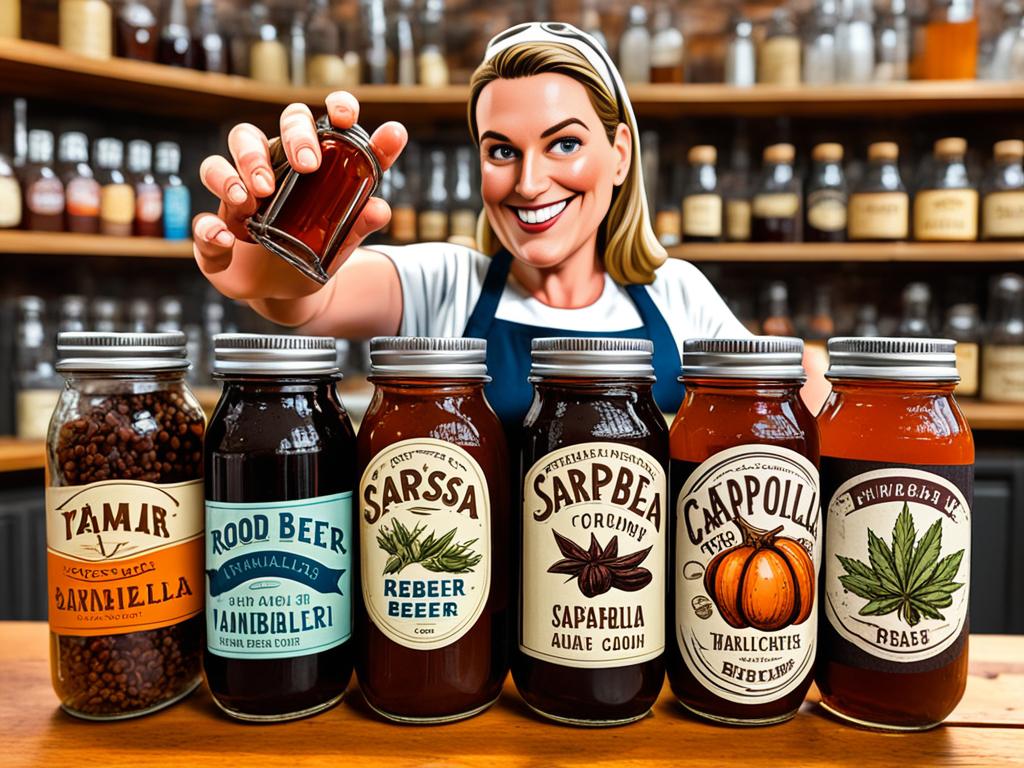
Gather your herbs, dust off that cauldron (okay, maybe just a large pot), and let’s start the alchemy. The key to a great root beer recipe lies in the delicate mixture of earthy roots and aromatic herbs, but the real magic? That’s your personal touch. Here’s an approachable guide to ensure your DIY root beer tastes just like you dreamt it would:
- Day 1: Start with crafting your base—a robust decoction of roots and herbs simmered to perfection, coaxing out all those rich, earthy flavors.
- Day 2: After a good night’s rest (for both you and your brew), it’s time to wake up and invigorate your potion with a dash of citric acid, balancing the flavors and giving it that zesty edge.
- The Sweet Science: Sugar, sugar, sugar. It doesn’t just make your root beer sweet; it’s the engine behind the fizz. Customizing your sugar levels means the power to create a root beer from lightly sweet to dessert in a bottle—it’s all up to you.
- Bottle it up: Farewell, cauldron; hello, bottles! Decant your root beer concoction with patience and a steady hand. Seal it tight to trap that tantalizing fizz.
There you have it, a straightforward path to your very own homemade soda bliss. Remember, the best root beer recipe is the one that’s all yours. Find that perfect balance of sweet and tangy, mix in the most delightful herbs you can find, and voila! You’ve just concocted a signature drink that’s uniquely your brand of spectacular. Cheers!
The Secret Botanicals: Decoding the Herbal Mixture
Ever wondered what gives root beer its enchanting flavor and nostalgic charm? It’s time to unveil the secret botanicals that create a symphony of taste in your beloved brew. From the rich mineral undertones to the signature foamy visuals, these natural ingredients are the unsung heroes of root beer alchemy.
Base Roots and Herbs for a Rich Mineral Flavor
At the heart of your concoction are the base roots and herbs, not just for flavor, but for the quintessential mineral zest. Think of burdock and dandelion roots as the unsung bass players in the root beer band, laying down the groove. These aren’t just any old weeds from your backyard—they’re rich in earthy tones that play a pivotal role in building the complexity of your brew.
Flavor Spice Herbs: Elevating the Aroma
Who would want a flat-tasting root beer? Boost those aromatic notes with the intricate dance of fennel and anise, as they swirl their licorice whispers into the mix. But let’s not forget the heavy-hitters like ginger and sassafras, because they’re the ones infusing that kick which roots deep into your taste memory. One sip and you’re hooked!
Foaming and Coloring Herbs: Achieving the Signature Look
Let’s talk visuals. Root beer’s charm isn’t complete without its signature foaming head and robust color. Here’s where the foaming herbs come into play. Ingredients like yucca extract whip up the frothy feel we all love. And coloring herbs, like roasted dandelion, paint the potion with hues that range from sunset amber to midnight brown.
Curious about what else garnishes your favorite fizzy delicacy? Take a peek at the table below that breaks down the symphony of herbs responsible for that root beer magic.
| Herb Category | Main Players | Flavor Contribution |
|---|---|---|
| Base Roots | Burdock, Dandelion | Rustic and earthy, grounding the overall flavor |
| Flavor Spices | Ginger, Fennel, Anise, Sassafras | Spicy kick to sweet, adding layers of aroma |
| Medicinal Enhancers | Reishi, Chaga, Astragalus | Subtle, immune-boosting undertones |
| Foaming Agents | Yucca Extract | Creates the iconic root beer foam |
| Coloring Herbs | Roasted Dandelion Roots, Birch Bark | Providing deep amber to browns |
Now that you’re illuminated on the components that give root beer its unique character, why not give into that brewing urge? With sassafras whispers, the ginger snap, and the dandelion hue, your next homemade batch could be the talk of the town.

Natural Sweetness: Choosing the Right Sugar
When it comes to brewing root beer, the sweetness profile is not just a trivial aspect—it’s the cornerstone of your concoction’s appeal. The art of sugar layering in soda plays a tantalizing dance on the tongue, teasing it with levels of sweetness derived from the charming world of natural sugars. Picture molasses draping your root beer with its dark, rich nectar, or the golden kiss of honey, transforming your homemade brew into a spellbinding potion. With the array of sweetener options for brewing, you are the maestro of your beverage’s destiny.

Do not think of sweeteners as mere instruments of taste; they are the contributing artists to the mouthfeel and overall harmony of your root beer symphony. Whether it be the light, crystalline simplicity of cane sugar or the intricate depth of flavor that molasses brings to the table, each sweetener has its solo moment while contributing to the greater sensory ensemble. Let’s explore some widely acclaimed root beer sweeteners and how you may deftly weave them into the fabric of your fizzy delight.
| Natural Sweetener | Flavor Profile | Benefits |
|---|---|---|
| Cane Sugar | Clean, sweet, no aftertaste | Uniformity in sweetness, excellent for consistency |
| Beet Sugar | Neutral sweetness, slight earthiness | Great for a more grounded flavor profile |
| Honey | Floral notes, rich complexity | Added aroma and depth, variable flavors based on source |
| Molasses | Dark, robust, and smoky | Contributes color and a full-bodied experience |
| Maple Syrup | Distinctive woody sweetness | Signature flavor for a unique twist |
As you ponder the sweetener options for brewing your next batch, let these natural sweeteners woo you with their individual charms. Be bold, experiment with a mixture or find that one soloist who can carry the tune of your personal root beer ballad. Whatever your choice, the mastery of root beer sweeteners lies not just in the selection but in how you orchestrate their abilities to bring forth a soda that dances on the palate with every sip.
Adding Acidity: The Crucial Balancing Act
Think of a symphony. Each note by itself is relatively straightforward, but their combination can invoke emotion, create an experience. Much like a conductor expertly navigating through a score, you’re about to orchestrate a perfect harmony of sweetness and tang in your root beer. Let’s delve into how precisely these sour notes can accent the melody of your homebrew.

Natural Acidic Ingredients for a Crisp Tang
Have you ever sampled a refreshingly tart drink and marveled at its invigorating zest? That’s acidity at play. Opting for natural acids like lemon, cranberry, or apple imparts a nuanced vibrancy to your beverages, which synthetic counterparts can’t quite replicate. These gifts from nature not only perk up your taste buds but mingle graciously with the complex flavors in root beer.
Using Semi-Natural Acids for Precision and Preservation
And then we have trustworthy citric acid, a titan in the realm of acidity in beverages, which offers precise pH balance and acts as a beacon for preservation. Its consistency and effectiveness make it an all-star in your kitchen laboratory. A dash can enhance the natural preservation of your syrup, extending its shelf life so that you can savor the fruits of your labor longer.
When it comes to maintaining that perfect level of tartness, you’re in the driver’s seat. Your mission, should you choose to accept it, involves rigorous testing of your brew’s pH. Just a few strategic acidic adjustments and you ensure not only a palate-pleasing punch but also a preservative advantage.
| Acid Type | Source | Flavor Profile | pH Balance Impact | Preservation Factor |
|---|---|---|---|---|
| Natural | Cranberry Juice | Tart, Fruity | Subtle | Moderate |
| Semi-Natural | Citric Acid | Sharp, Clear | Precise | High |
| Natural | Lemon Juice | Citrusy, Bright | Variable | Moderate |
Bubbles and Fizz: The Carbonation Process
Nothing tickles the tongue quite like the sharp snap of a fizzy drink erupting with CO2 bubbles. It’s the life of the party in your glass—and by ‘party,’ of course, we mean your beloved sparkling beverage. Whether you’re a soda connoisseur or an enthusiastic home brewer, mastering the art of carbonation in soda is your ticket to effervescent ecstasy.
Let’s pop the lid on the soda brewing techniques that rouse those delightful bubbles from their liquid lair. Have you heard of the dry ice method? It’s much like a magic trick, but in your kitchen. Poof! A little dry ice, some careful stirring, and your root beer goes from flat to fizz in mere moments, cascading with carbonation as if by some frosty charm.
Now, don’t mistake carbonation for mere child’s play. It’s no simple feat to get those bubbles just right. With zeal and precision, the transformation awaits. Behold, the table below, laying bare the differences you might encounter on your path to a blissfully bubbly brew.
| Method | Speed | Control | Adventure Rating |
|---|---|---|---|
| Dry Ice | Quick | Medium | Exciting, Watch your fingertips! |
| Yeasting | Slow | Variable | A patient brewer’s journey |
| Soda Siphon | Instant | High | Modern convenience, barista vibes |
So there you have it, the methods laid bare before your eyes like the cards of a skilled magician. Whichever path you choose in creating your carbonated concoction, remember: the bubbles are the beat of the soda’s heart. May your fizzy drink adventures be as scintillating as the CO2 bubbles within your glass.
From Crockpot to Carbonation: Crafting Immune-Supporting Root Beer Syrup
Unlock the secrets to a homemade root beer syrup recipe that not only tantalizes your tastebuds but also supports your well-being. Let’s embark on a journey to craft a crockpot concoction destined to become the base of your favorite DIY carbonated drink. Rest assured, our syrup is crafted with a host of immune-supporting ingredients, each with a storied past in traditional herbalism.
Immune Root Beer Syrup Ingredients
Start by gathering the following root beer ingredients, each chosen for their rich flavors and health-boosting properties:
- Dandelion Root – adored by herbalists for its detoxifying attributes
- Burdock Root – known for its blood-purifying prowess
- Ginger – a zesty spice celebrated for its immune-modulating qualities
- Sassafras – the classic spice that gives root beer its distinctive aroma
- Licorice Root – this sweet root aids in soothing and harmonizing the blend
Step-by-Step Crockpot Root Beer Syrup Recipe
Now, let’s put all these sublime ingredients into action and whip up a batch of delicious, immune-boosting syrup:
- Add all roots and spices into your crockpot, fully immersing them in water.
- Set your crockpot to low heat and let the mixture simmer for a good 24 hours. Yes, patience is key here!
- Sieve the solids out, pouring the concentrated liquid into a sterilized container.
- Marvel at the transformation. This is your root beer concentrate!
- Embolden the syrup with your choice of sweetener—think raw honey, or organic cane sugar for a robust depth of flavor.
- Stir in a splash of lemon juice or a pinch of citric acid to balance with a subtle tartness.
- Let your syrup cool, then store it in the fridge, ready to be mixed into a fizzy, gratifying concoction.
When you’re ready to enjoy, simply add the syrup to carbonated water, and you’ve got yourself a homemade root beer syrup recipe that’s as satisfying as it is supportive to your immune system.
| Ingredient | Health Benefit | Role in Syrup |
|---|---|---|
| Dandelion Root | Detoxifier | Base flavor, nutrient-rich |
| Burdock Root | Blood purifier | Adds earthy undertones and supports skin health |
| Ginger | Immune modulator | Brings warmth and spice |
| Sassafras | Traditional flavor enhancer | The definitive root beer aroma |
| Licorice Root | Soothing agent | Contributes to the sweet, full-bodied flavor profile |
So there you have it, your very own golden elixir of health and happiness. By bringing together a symphony of spices and roots, you’ve unlocked the quintessence of a root beer that harkens back to its authentic roots but with a modern, healthful twist. So go ahead, illuminate your next gathering with your own crockpot concoction of this historical brew!

Tips for Safe Dry Ice Handling in Homemade Root Beer
Who doesn’t love the satisfying sizzle of root beer as it fizzes and pops? That effervescent magic is none other than the work of dry ice carbonation, a key player in your DIY soda endeavors. But before you dive into creating that frothy goodness at home, make sure you’re up to speed on the safe use of dry ice. After all, handling carbon dioxide in its frozen form is no child’s play, and skipping the dry ice precautions could swiftly turn your fizzy fantasy into a DIY soda risk.
Understanding Dry Ice and Its Properties
Think of dry ice as carbon dioxide’s chilly alter ego. It’s not ice as you know it, but rather frozen CO2 at a brisk -109.3°F (-78.5°C). This subzero superstar turns from a solid to a gas – a process called sublimation – skipping the liquid stage entirely. This quick-change act not only cools your brew but also gives your homemade root beer the bubbles that dance on your tongue.

Best Practices for Incorporating Dry Ice
Now, let’s gear up with some golden rules for dry ice carbonation:
- Dress the part – insulated gloves or tongs should always be part of your dry ice ensemble to prevent frostbite-like burns.
- Store your cold companion in an insulated cooler, and let it have plenty of alone time – never enclose it in an airtight container.
- Use it in a well-ventilated area to sidestep the buildup of carbon dioxide gas, which could turn your kitchen into a no-breathing zone.
When it’s showtime, remember that less is more. A small piece of dry ice goes a long way in providing the carbonation you crave without turning your mixture into an Antarctic expedition.
| Handling practices | Reasons |
|---|---|
| Wearing protection | Prevents skin damage from extreme cold |
| Insulated storage | Controls sublimation rate |
| Room ventilation | Ensures safe oxygen levels |
| Gradual addition | Allows better control of carbonation levels |
By honoring these guidelines and handling carbon dioxide with the respect it demands, you’ll keep the dry ice drama to a freeze frame and secure a bubbly triumph in your homemade root beer saga.
Conclusion
Embarking on your root beer making journey, you’ve navigated through a forest of sassafras, spelunked into the mines of natural sweeteners, and carbonated your way into the bubbles of success. You didn’t just mix ingredients; you stirred centuries of tradition with contemporary curiosity, distilling the quintessence of an American heritage into every bottle. Much more than crafting a delicious DIY beverage, you’ve partaken in a rite that’s crafted with care, connecting you to an array of home brewing roots.
Let’s not gloss over the reality though—while the pursuit is romantic, it demands the precision of a chemist and the patience of a saint. But isn’t the reward in the glass just that much sweeter? Each sip celebrates not just the rich tapestry of flavors but the self-made brewer’s pride. Your fizzy creation stands testament to a well-balanced life that finds joy in the alchemy of the old world tethered to the modern day.
Whether shared at a family barbecue or enjoyed in a quiet moment of reflection, your root beer carries a story—a narrative steeped in both personal endeavor and shared heritage. This isn’t just a drink; it’s a labor of love, a crafted concoction that effervesces with your dedication to the craft. So, as you pop the cap off your homemade batch, remember the journey that got you here and revel in the fact that this fizzy symphony of taste is uniquely yours to enjoy and share.
FAQ
What natural ingredients do I need for crafting homemade root beer?
Oh, you’re diving into the herbal mixology world – how very hipster-chic of you! Grab some sassafras, birch, dandelion, burdock, and ginger to start. These botanical buddies will set the foundation for a truly authentic root beer experience replete with natural flavor.
Who kick-started the commercial root beer industry?
Mr. Charles Elmer Hires, the original root beer aficionado and surely the toast of many a temperance movement picnic. In 1876, at the Philadelphia Centennial Exposition, Hires introduced his version of root beer to the masses, giving us all a reason to raise our mugs in thanks.
Can homemade root beer really support my immune system?
Absolutely! When you opt for mother nature’s larder over fructose corn syrup and those dubious artificial flavors, you’re not just tickling your taste buds; you’re infusing your fizz with immune-supporting roots. So yes, sip on that homemade concoction and feel practically virtuous with every gulp!
How do I start crafting my own batch of root beer at home?
You’ll need patience, roots, herbs, sugar, acids, and a touch of carbonation charisma. Begin with creating a root and herb decoction – think of it as a tea party for all the cool underground ingredients. Sweeten as you see fit, then add some acids to balance the sweetness. Lastly, let the carbonation do the tango with your brew, and voilà!
Which herbs provide the base for root beer’s mineral flavor?
Roll out the botanical carpet for burdock and dandelion, my friend. These are your go-tos for a rich mineral dance on your tongue. They are like the bass and drums of a great song, setting the tone for your root beer melody.
How do I choose the right sweetener for homemade root beer?
Sweetening your root beer is akin to choosing the right hat for a fancy outing – it’s all about matching style with substance. From the light elegance of cane sugar to the deep mystery of molasses, select a natural sugar that complements your palette’s preferences and the character of your brew.
What are my options for adding acidity to root beer?
Fancy a tart zing? Squeeze some citrus or flirt with cranberry juice. Craving precision? Citric or malic acid might just become your best buddies. They’re like adding just the right amount of zest or zing to make your root beer sing!
What are the methods for carbonating homemade root beer?
Whether you’re a fan of the DIY dry ice sizzle or you prefer to waltz with a commercial CO2 setup, the goal is the same: getting those tiny bubbles to their popping party! Each method adds its own sparkling personality to your brew.
Can you offer a step-by-step guide for making immune-supporting root beer syrup?
Combining immune-boosting botanicals with natural sweeteners in your cauldron (ok, crockpot), let the magic simmer. After the reduction, add acids and CO2 into the potion for that effervescent jive. Follow the recipe with an alchemist’s precision and an artist’s flair!
How do I safely handle dry ice when making root beer at home?
Dry ice will put the ‘cool’ in your crafting, but respect is key. Armored with insulated gloves or tongs, handle it like the frosty VIP that it is. Store it with the care of a snowflake under a summer sun, and always ensure proper ventilation – because playing it cool should never come with a frostbite!